Watch This Episode
Listen
Marketing to the Heart: Landria Seals Green on Authentic Storytelling in Behavioral Health
What happens when behavioral health organizations start treating their employees as their most important clients?
In this episode of Tim Talks: Behavioral Health, Tim Zercher sits down with Landria Seals Green, Founder & CEO of ExcelPrep, to explore what it really takes to build organizations where both the people receiving services and the professionals providing them can thrive.
Landria shares the personal experiences that led her to build ExcelPrep, why dignity should be at the center of therapy and education, and why sustainable organizations need to understand the human experience behind their workforce.
They also discuss perfectionism and burnout, the role of mentorship in developing stronger clinicians and leaders, the challenges of scaling a people-driven organization, and why marketing for behavioral health organizations needs to move beyond transactions and connect with people on a more human level.
Relational Marketing Wins Over Transactional Marketing
Green emphasizes that effective marketing for behavioral health organizations means speaking “to the heart” of the people they serve rather than relying on purely transactional messaging. She points to how audiences on platforms like Instagram and TikTok are drawn to watching real people live their lives and tell authentic stories. For organizations serving families making sensitive decisions, like choosing a school or a therapy provider, she stresses avoiding stock imagery or “fake kids, fake people” in marketing, since audiences can sense when content isn’t genuine. The takeaway: campaigns built around real families, real outcomes, and real voices tend to resonate more than polished, generic messaging.
Authentic, Low-Production “Day in the Life” Content
When asked what marketing tactic she’s currently exploring, Green describes wanting to document the everyday operations of her organization: someone filming her and her team doing their actual work, paired with voiceover explaining the “why” behind it. She references the trend of simple, low-fidelity videos (like someone pouring coffee) that hold attention not because of production value, but because of what’s being said. For marketing for behavioral health organizations, this suggests an opportunity to build trust through unpolished, operational, behind-the-scenes content rather than heavily staged campaigns, as long as the message and value being communicated is clear and consistent across the team.
Mission and Culture as a Marketing Differentiator
Throughout the conversation, Green ties her organization’s growth and reputation back to its internal mission of supporting the people who deliver care, not just the outcomes for clients. This points to a broader shift in marketing for behavioral health organizations, where communicating internal culture and values has become part of the external brand story: messaging that a mission-driven, people-first culture is what enables consistent, quality care. This kind of narrative can support both client acquisition and workforce recruitment, since prospective families and prospective employees are often evaluating the same underlying signal, which is whether the organization actually lives its stated mission.
About Our Guest: Landria Seals Green
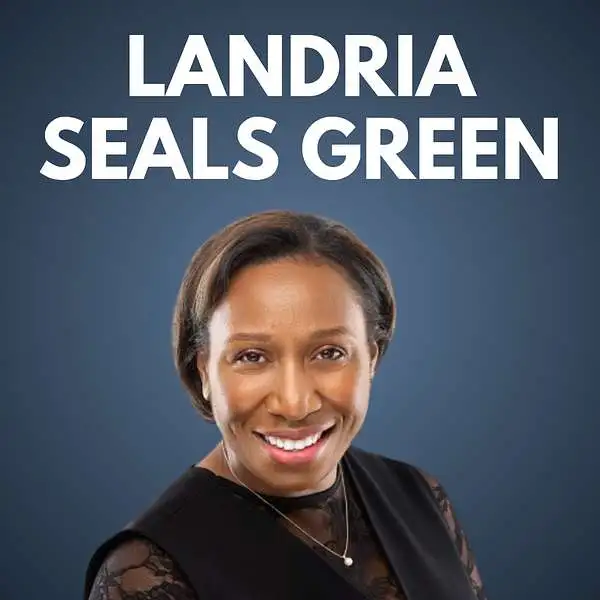
Landria Seals Green is the Founder & CEO of ExcelPrep and Founder & Chief Visionary Officer of Huddle Online. A certified speech-language pathologist and board certified behavior analyst, Landria brings more than 20 years of clinical experience in autism to her work supporting neurodiverse learners, behavioral health professionals, and organizations. Her work combines behavior science, education, implementation science, mentorship, and leadership development to create better outcomes for children, families, and the professionals who serve them.
Visit the ExcelPrep Schools website to learn more about Landria Seals Green and her mission.
Episode FAQ
How can behavioral health and treatment organizations market authentically without exploiting client stories?
Authentic marketing means telling the real story of your organization’s mission and impact without using staged imagery, stock photos of “fake” clients, or manufactured narratives. As one clinical leader put it in a recent conversation, audiences can sense when content isn’t genuine, and relational marketing (built on real staff voices and real outcomes, communicated with appropriate privacy safeguards) consistently outperforms purely transactional messaging.
What is relational marketing, and why does it matter for addiction treatment and mental health providers?
Relational marketing focuses on connecting with the emotional decision-making of the people who choose care, whether that’s a parent selecting a school or a family selecting a treatment provider, rather than only pushing transactional calls to action. It relies on consistent messaging, staff-driven storytelling, and content that reflects an organization’s actual day-to-day mission.
Is behind-the-scenes or "day in the life" video content effective for healthcare and education marketing?
Yes, when it’s paired with a clear message. Low-production, authentic video (staff walking through daily operations, explained with a simple voiceover on “the why”) tends to build trust more effectively than heavily staged campaigns, as long as the underlying message stays consistent across the organization’s team and channels.
How does organizational culture affect a behavioral health brand's public reputation and marketing?
Prospective clients and prospective employees often evaluate the same signal: whether an organization actually lives its stated mission internally, not just in its marketing copy. A people-first culture that supports staff wellbeing tends to translate into more consistent, credible external messaging and stronger word-of-mouth referrals.
Episode Transcript
View the full transcript
Timothy Zercher
Landrea, thank you so much for joining us. We really appreciate you taking time out of your busy schedule.
Landria Seals Green
Thank you. Thank you for having me.
Timothy Zercher
Absolutely. So you’ve built schools, mentorship platforms, consulting programs, and I’m sure many other things throughout your career. What originally inspired you to focus your work on helping neurodivergent learners and professionals who support them?
Landria Seals Green
The original focus for my entry into the profession, how it broadened, was just personal experience of wanting to make sure that families felt as though their therapy made sense for them. Their therapy did its job in providing the bridge for their loved one, whether it’s an adult, whether it’s a child, to be able to have success and also have success inside of dignity. So my grandmother had a stroke, and I never really got to know my grandmother, but I heard stories about her, but I would often see the impact of therapy of getting her coloring sheets. And she was a nurse and had a whole career and profession. And I felt as a child, why does my grandmother have coloring sheets when I keep hearing about all the things that she had accomplished in her life? And so that made me want to make sure that we did therapy differently from that perspective, from that heart perspective of making sure we provided not only great services for people, but the intervention mattered and made a difference and was the bridge to their real life. But most recently, well, we’re a few years in now, one of our children was diagnosed with a learning disability. And all I wanted to do was go back and get a PhD. I had completed an MA and I wanted to go back and get a PhD. And I was in school, and we just could not find a place in our area to provide her the educational experience that I knew that she could have, should have, and make a difference in her life. And so we found ourselves building a school at the behest and request, at the request of my seven-year-old who asked us, who told me that she would go to a school that I built for her. And personally, I felt as if I had made space in my life to do all of these things for other people’s children and other people’s relatives. Why would I not make space for my own child in my own life? And so we’re here four years in Excel Prep, and we are four locations.
Timothy Zercher
Wow, that’s incredible. And only three years, that’s a very quick growth. Clearly, there was a real need in your environment, not just a need that you saw. That’s very cool. So your work combines implementation science, behavior analysis, and leadership development. What do you think separates organizations that successfully implement change from those that struggle to sustain it?
Landria Seals Green
Well, I think it’s the core of the mission. So you can’t have a mission where you focus only on outcomes and data for the client. And then I guess you have to start organizations to start asking themselves, who is our client truly? And the organization’s client is the person that works there. And the organization has to have a mission that supports people, not from a let me know all your business and I can help you in your life. But the organization standing up is really fueled by helping people stand up, people inside of the clinical work. And so bridging in the clinical self, the professional self, and those things have to evolve, but those things are will only evolve well if we also think of people as human beings having a human experience in life. And so I use this example a lot, but if I’m potty training my three-year-old and I have twins, and potty training is never easy. I don’t think for any person, it’s not easy. But if I’m potty training and then I have to go into my workspace and I’m also potty training someone else’s child, and I’m cleaning up and doing all of those things, I’m in my elbows with potty mess. And so I don’t have personal capacity or professional capacity to solve anyone’s problem, even though my clinical self says I know what to do. So we don’t combine all of those and make sure that people are okay and they are infusing all three of those components, then we will continue to lose a workforce and organizations have to start paying attention to that.
Timothy Zercher
I love that. I love that. So, like, like you mentioned, you spend a lot of your time now mentoring clinicians and leaders. What is one lesson that you wish every behavioral health professional or bleeder learned earlier in their careers?
Landria Seals Green
That they get to make mistakes. They get to get it wrong. Like no one is gonna walk out in this thing, walk through this thing perfectly. And so, but that comes from learning history in childhood. So if I couldn’t get things wrong in my childhood, then I’m going to be engineered before I even walk through your doors, a level of perfection. So burnout is not necessarily happening inside of the workplace. People have been burned and they are burning out. And it’s not often the organization, it’s life. So I think that if we could just tell people they get to make mistakes, they get to evolve, and they get to learn from it if they want to. So that’s what I wish people knew.
Timothy Zercher
I love that. I love that. Well, especially, I mean, the people that make it to the doctorate level, the master’s level, they tend to be those that need perfection. There’s a reason they’re the grade A student.
Landria Seals Green
Well, I have to say this. I have to say there are no geniuses here. I’ve been inside of academic walls before I went to complete getting ready for a PhD and all of that. And sometimes you think, I think Barack Obama said it, you know, you see people at a certain level in life, you see people who have these accolades, and you’re like, man, they must have it all together. And I always start with this mantra of I guess if I go back to the previous question, they get to make mistakes and also realizing there are no geniuses here. There are no geniuses here. So that kind of takes the weight off.
Timothy Zercher
Yeah, absolutely. Absolutely. I love that. Um, what have you found is the hardest part of growing your organization?
Landria Seals Green
People, yeah, people. Some people are not engineered to listen to me, not because of me, but because they are engineered, like some people only have experiences with supervisors who look a certain way, who sound a certain way. And so if that’s part of your training, then when I come with me, my flavor, how I sound, my style, you may misinterpret it because you don’t have enough experience or fluency or contact with the variable that I bring. So I think there’s that. There are certain people who come into your organization who know everything and they might. And so when they know everything, they your policies and your procedures go out the window because they know everything. So there’s the failure to read. And so I think of mentorship in a long couple different ways. And so mentorship from a person is wonderful, but mentorship and learning also happens in the book. My father used to tell us that all the time: you can read and you can be mentored by that text right there. And so policy is mentorship, mission is mentorship, operational manuals and clinical manuals are also a form of mentorship. And so I think the part is that generationally you have people who seek knowledge and learning in the way that they want knowledge and learning. So some people don’t want to read, they don’t want to listen, and some people do want to read. And so it’s understanding that every individual has their learning history and learning style. And how does an organization create universal designs of learning, if you will, for people to contact information in the way that suits them and benefits the organization at the same time.
Timothy Zercher
So people, yeah, absolutely, absolutely. I think, I mean, I think almost regardless of your specific challenges, your specific differences, people are always the hardest part of running any team or growing any business, right? Because there’s different challenges. No matter who you’re working with or who you are, there’s always going to be some kind of challenge with people. Um yeah, which is why the study of people in psychology is so valuable, in my opinion. So, last question, and it’s a two-part question because we focus on marketing for behavioral health groups, and we always have to ask some marketing-like questions. The first one is what works best for you right now, especially outside of word of mouth when it comes to acquiring new students for your programs.
Landria Seals Green
What works best for us is making sure we market to the heart of the person that we want to consume our services. So oftentimes you see transactional marketing, and transactional marketing, it has its say and it has its presence. But relational marketing is also important too. And I think that when you look at the trends of what happens in Instagram, what happens in TikTok, people are watching people and they’re listening to them live their life and tell the story. And so we have to start thinking about what are the trends that consumers are consuming. And are we speaking the language, visual language, the auditory language of a consumer? So if my consumer is a parent who makes decisions, then I’m going to make sure that I’m going to market towards parents. And so I’m not using fake kids, fake people in my marketing because people can feel that. You got to tell the story of your organization, and the heart of your organization has to come through your marketing.
Timothy Zercher
I love that. I love that. You have to find a way to speak to the heart. That is the point is speaking to the emotion. So often, I think I love that you understand that. I think so often people think that marketing is a very logical thing, and it’s not. It’s all about tying into the emotion because that’s how people make decisions is really about their emotions.
Landria Seals Green
Absolutely.
Timothy Zercher
Yeah. Last question then. What is one marketing tactic or strategy that you are watching in the marketplace or actually considering starting to use for one of your businesses?
Landria Seals Green
Ah, one particular strategy is what I said. Having someone follow me around doing what I do, and then I get to do a voiceover and talk about the why. It’s just simple things like I’ve seen videos where people get a lot of views, and it’s like someone pouring coffee. And it’s like you’re watching something that is lo-fi, if you will, if I use the words of my 13-year-old, you something that’s lo-fi, but your content is the what you’re saying is what’s keeping me watching something that’s mundane is pouring coffee. And so trying to figure out how that looks in my real life. Does someone video us, walk around with us operationally? How do we achieve that coffee thing that I just described? So putting operations behind this relational thing that I keep describing, I think it’s the toughest part because you need hands, you need people, you need thought, and you gotta have something to say.
Timothy Zercher
Absolutely.
Landria Seals Green
If you don’t have something valuable, yeah, you gotta have some value add. So I think that’s the other part. What do we want to say? How do we stay in line with it? What is what is our message? And are we all clear? Is everyone on the team clear about the message that we want to share right now? I think that’s it.
Timothy Zercher
I love that. I love that. I think it’s I think it’s very smart. I think it’s very hard to execute good video content like that. It’s very hard to execute, but it is doable. People do it all day long, right? It is doable.
Landria Seals Green
Hire a teenager.
Timothy Zercher
I was gonna say, well, you’d be surprised the talent you can get at the local high school.
Landria Seals Green
Yes. I’ve I’ve I’ve hired my son, and he’s been doing stuff, and so that has been great for us because his eyes are different than my eyes.
Timothy Zercher
Yeah. That’s cool. That’s cool. That’s cool. Well, and what a fun opportunity for you to work with him too.
Landria Seals Green
Ask him if you should ask him.
Timothy Zercher
I’m about to say, we’ll see if he thinks it’s fun, but that’s a different problem, right? Yeah. Well, Landrea, thank you so much for joining us. Thank you for coming on and taking time. We really appreciate all the insights that you’ve shared.
Landria Seals Green
Thank you. I appreciate it.