
Watch This Episode
Listen
Behavioral Health Hiring, Grace, and Trust With Kofee L. Mostella
What happens when compassion becomes the foundation of how you lead and grow?
On this episode of Tim Talks: Behavioral Health, Tim Zercher sits down with Kofee L. Mostella, MACM, LICDC, Owner and CEO of FocusCare LLC.
Drawing on nearly three decades in counseling and behavioral health, Kofee shares how growing up in Youngstown inspired her commitment to community care. She discusses learning to give herself grace as a leader, her approach to behavioral health hiring based on integrity and compassion, building trust within teams, and why community involvement matters.
Kofee also explains why, after spending thousands on marketing, personal referrals remain one of the most powerful drivers of growth in behavioral health.
The conversation explores what it takes to build an organization where reputation, relationships, and quality of care come first.
Hiring for Compassion and Integrity in Behavioral Health
Kofee L. Mostella doesn’t run traditional interviews. Instead, she invites candidates to lunch and watches how they treat the server, how they order, and how they carry a conversation. Her view is that a shared meal shows who a person really is.
Her behavioral health hiring philosophy rests on two qualities she believes can’t be taught: integrity and compassion. “Either you have it or you don’t,” she explains. If a candidate brings those two traits, every other skill can be learned on the job.
For behavioral health organizations that are growing, this approach keeps compassion at the center of the culture from the very first hire, across every population the organization serves.
Leading With Grace: Lessons From 29 Years as a Counselor
After nearly three decades in counseling, Kofee has faced several periods of burnout. One of the most important lessons she learned came from her own counselor, because, as she puts it, every counselor needs a counselor. She realized she couldn’t ask others to do something she wasn’t willing to do herself.
If she told her team to give themselves grace to grow, she had to extend that same grace to herself. That meant letting go of the need to control everything and everyone. She points to the Serenity Prayer as a guide: accepting what she can’t change, finding the courage to change what she can, and building the wisdom to know the difference.
Tim noted that ambitious leaders are often hardest on themselves. Kofee’s experience shows that modeling self-compassion is one of the most effective ways to build a healthy, sustainable team.
Why Referrals Outperform Paid Marketing in Behavioral Health
Kofee has spent tens of thousands of dollars on marketing, including print and commercials, and nothing has beaten a personal referral. At one Southern Ohio location, clients brought friends and family to their own appointments to help them get connected to care.
Tim agreed from A-Train Marketing’s perspective. Word of mouth should be the main source of new clients and new talent. Marketing for behavioral health, advertising, and referral network development should add to that foundation, accounting for perhaps 20 to 40 percent of new acquisition. If referrals aren’t coming in, there may be an operational issue worth fixing before increasing ad spend. New organizations are a common exception.
Kofee is also watching social media closely. It’s a useful tool, but she’s still evaluating how it can both help and hurt behavioral health care. With platforms and Google’s algorithms changing often, a solid reputation remains the most reliable baseline.
About Our Guest: Kofee Mostella
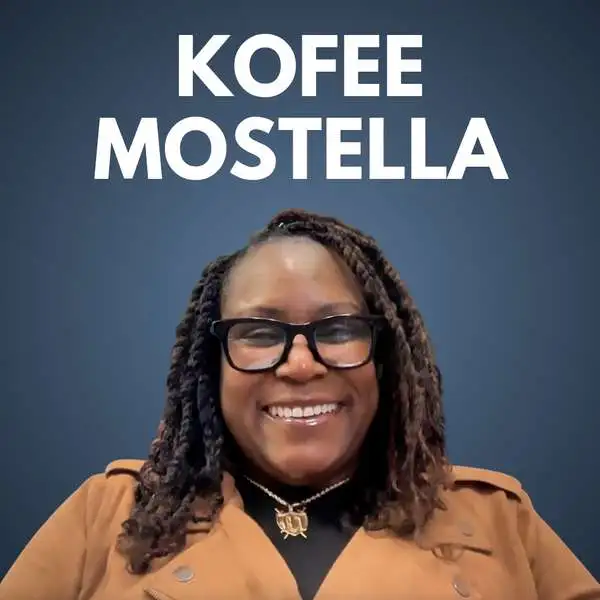
Kofee L. Mostella, MACM, LICDC, is the Owner and CEO of FocusCare LLC, an outpatient behavioral healthcare organization serving children, adults, and families. With nearly three decades of counseling experience, Kofee is passionate about compassionate care, community impact, strong leadership, and helping people become the best versions of themselves.
Visit the FocusCare LLC website to learn more about their mission.
Episode FAQ
How should behavioral health organizations hire for compassion?
Kofee L. Mostella hires for two traits she believes can’t be taught: integrity and compassion. Instead of formal interviews, she often meets candidates over a meal and observes how they treat servers and engage in conversation. Once someone shows those core qualities, she can train every other skill.
How can behavioral health leaders prevent burnout?
After 29 years as a counselor, Kofee learned that leaders have to practice what they teach. That includes working with a counselor of their own, giving themselves the same grace they ask of their teams, and letting go of the need to control everything. She points to the Serenity Prayer as a guiding principle.
What is the most effective way for behavioral health providers to attract new clients?
In Kofee’s experience, nothing beats a personal referral, even after spending tens of thousands of dollars on print and commercial advertising. A-Train Marketing agrees that word of mouth should be the main source of new clients and talent. Marketing and referral network development should add to that foundation, typically making up around 20 to 40 percent of new acquisition.
Should behavioral health organizations use social media marketing?
Kofee sees social media as a useful tool but is still watching how it can both help and hurt behavioral health care. Because platforms and search algorithms change often, A-Train Marketing recommends building on a strong reputation and solid connections first, then layering in social media and other channels.
Episode Transcript
View the full transcript
Timothy Zercher 0:00
Well, Coffee, thank you so much for joining us. We really appreciate it.
Kofee L. Mostella 0:03
Thank you so much for having me, Tim.
Timothy Zercher 0:05
Absolutely. Absolutely. So I want to start out by asking what inspired you to dedicate your career to behavioral health and community care.
Kofee L. Mostella 0:13
Growing up on the south side of Youngstown in the 90s, I see my community of middle class families decline rapidly. And my goal was to go to school, get as much education as I possibly could, and come back to help my community. And that’s what I done.
Timothy Zercher 0:32
I love that. A very direct, direct path of your career. A lot of people, I think, kind of accidentally fall into behavioral health, but it sounds like you you knew what you wanted right off the bat.
Kofee L. Mostella 0:41
Well, seeing friends and family during the crack epidemic deteriorate, I felt it was an I had a need to do something to help.
Timothy Zercher 0:50
Absolutely. Because you have a very clear goal for a good reason. So you often talk about growth require requiring grace. Maybe you can tell one difficult leadership lesson that has shaped the way that you lead.
Kofee L. Mostella 1:02
I had to realize that after I’ve been a counselor for 29 years. So it’s been multiple periods of burnout. So during these periods of burnout, I had to learn at some point. I don’t know, it was one of the counselors that I had, because every counselor needs a counselor, that I could not teach other people to do something that I was not willing to do myself. So if I told them that they had to give themselves grace to grow, then I had to give myself grace to grow. And that meant that I couldn’t control everything. I couldn’t control everybody. And I had to accept things exactly what the similarity prayer says, accept the things I cannot change, the courage to change the things I could, and the wisdom to know the difference. So I had to start living what I preached, which is extremely difficult. It’s easier to say it to people than it is to actually do it.
Timothy Zercher 1:56
Yes, absolutely. Well, especially when it comes to when it comes to things like giving yourself grace, I think we are often the hardest on ourselves because we’re ambitious people in leadership generally, right? We have high standards.
Kofee L. Mostella 2:07
Yes.
Timothy Zercher 2:08
So the agencies or organizations that you’ve led serve clients of all ages and backgrounds. How do you build a culture that really keeps compassion at the center as you grow an organization, especially as you’re serving very different populations?
Kofee L. Mostella 2:24
It starts at the beginning. So I never done typical interviews. To me, everything I need to know about a person, I can learn over a meal. So I would just invite people to lunch and they had no idea that I was doing an interview. They had no idea what the purpose was. But everything for how you treat the servers, how you order, your conversation during a meal tells me what kind of person you are. And compassion is something that you cannot teach. I hire personally for integrity and compassion. You cannot teach integrity. Either you have it or you don’t. You cannot teach compassion. Either you have it or you don’t. If you have those two qualities, everything else I could teach you.
Timothy Zercher 3:13
I love that. That makes complete sense. Yeah, that makes complete sense. And everything else is teachable fairly quick if you have those two, if they have those two core pieces as well. What have you found is the hardest part of growing an organization or even just a team?
Kofee L. Mostella 3:28
Getting to know each other to find the trust spot. Getting to know each other as a team of people that I know what I know, you know what you know, but I need to trust you to do what you do, and you need to trust me. It’s in any organization, it’s finding that sweet trust spot that that when you say you’re going to do a project, I don’t have to worry about it. But that takes time and that takes that takes some out-of-the-workspace jelly on community service. Every position I’ve had, leadership, that was what you had to do. If you were in leadership in any organization that I was in charge of, community service was just a given. So during these community service projects, you get to see a different aspect of people. You get to see them interact with their children, you get to see them interact with their spouses, you get to see them interact with the community. And when you’re able to just see people as human, it gives you a different aspect of what they can do at work.
Timothy Zercher 4:32
That makes complete sense.
Kofee L. Mostella 4:33
My thing was we didn’t have we don’t have to be besties, but I need to trust you.
Timothy Zercher 4:37
Absolutely. You can’t lead an organization if they don’t trust you and if you don’t trust them. So what have you found works best in acquiring clients in your space? What kind of avenues worked best?
Kofee L. Mostella 4:50
I have spent tens of thousands of dollars on marketing. Like everything from print commercials, you name it, and nothing ever beats a personal referral. A client referral works. I had clients in one of my locations, Southern Ohio, that they would actually bring people with them to their appointments and say, hey, they need services now. And I’m like, wow. So to me, it’s the best advertisement ever. If you do a service that’s so well for a client that they want everybody that they know to get that service.
Timothy Zercher 5:34
Absolutely. I think that’s true too. I mean, I think there’s misconceptions around marketing and advertising for behavioral health. In my personal view, as a marketing person in the space, nothing should ever beat your word of mouth. Your word of mouth should always be the number one source of new clients and new talent, both. It should be a reputation that brings people in. And marketing and advertising and network activation and referral, network generation, all of that stuff should be a layer on top. 20, 30, maybe 40% of the new acquisition of client or talent. It should never be more. All of our audience needs to hear that. If you’re not getting referrals, then there’s something wrong operationally that you probably should fix before you start spending money on marketing and advertising. Except for a few exceptions. There are exceptions to the case where you’re a new company, for instance, but it’s pretty rare. What is one marketing tactic or strategy that you have just been watching really carefully in the marketplace?
Kofee L. Mostella 6:29
The biggest one is social media. I vacillate between is this the best way? Is it not? I think it’s a useful tool. From my experience, it’s exactly what you said. So when I would hire a team, I would tell my team, hey, who would you like to work with? Who from every previous position that you would like to work with? And let’s go get them. And when you go get a person, that person brings their people. They bring their clients, they bring other staff. So it becomes bigger. But looking at how social media can help and can hurt behavioral health care. I’ve been in behavioral health longer than basically Google. So watching how the trends go, I’m watching. I’m not all the way, all the way trusting, but I am watching.
Timothy Zercher 7:19
Yeah, yeah. Well, and marketing and advertising trends happen so fast, it’s very hard to keep up if you’re not actively doing it constantly, too, because today it might be Facebook and tomorrow it’s a whole different platform. And the next day it’s a whole different one and it changes constantly. And I mean, even just Google algorithms that determine who shows up when you search for a service change every quarter or less. Yeah. It’s hard to keep up on the trends, but if you have a good baseline, like you’re saying, if you have a good baseline of reputation and good connections, then that’ll that’ll carry you through, which I love. Well, thank you, Guffy. I really appreciate you taking time. I appreciate you participating in this and sharing some of your insights and experience.