Watch This Episode
Listen
Change Management in Behavioral Health: Leading Teams Through Real Transformation With Jennifer Riley
What does it really take to lead meaningful change in behavioral health?
On this episode of Tim Talks: Behavioral Health, Tim Zercher sits down with Jennifer Riley, LCSW-R, Director of Behavioral Health at Zucker Hillside Hospital, to discuss the realities of leading teams, improving operations, and navigating transformation in complex healthcare organizations.
Jennifer shares how her early exposure to mental health shaped her career, why successful change management goes far beyond implementing new technology, and how better internal processes can ultimately create a better patient experience.
They also explore the challenges of getting teams aligned during periods of change, attracting and retaining behavioral health professionals, and why leaders sometimes need to make difficult decisions rather than trying to make everyone happy.
Why Change Management in Behavioral Health Goes Deeper Than New Technology
When a behavioral health organization switches to a new electronic health record (EHR) or restructures its operations, it’s easy to assume the change is mostly technical.
Jennifer Riley explains that real transformation goes much further. It upends long-held assumptions about how teams work and why things have always been done a certain way. Her approach to change management in behavioral health starts with setting the stage early: being clear with staff about where the organization is today, where it’s headed, and why the change matters.
Clinicians naturally want to protect people’s feelings, and buy-in is important. But trying to make everyone happy can lead to inertia and delay the hard decisions that keep a transformation moving. Jennifer compares it to planting a seed. Plan what you can, give the idea time to take root, and offer regular updates and transparency as it grows.
Rethinking Internal Processes During an EHR Transition
One of the most common pitfalls in operational change is carrying old habits into a new system. During EHR transitions, Jennifer has focused on stepping back to ask why existing processes were built the way they were, whether they still serve the organization, and how they could be rebuilt more efficiently in the new platform.
Rather than holding onto “this is how we’ve always done it,” her teams use the transition as an opportunity to improve. She also points out a benefit that’s often overlooked: better internal processes lead to a better patient experience, even when the changes aren’t patient-facing.
Streamlined workflows reduce friction for staff, which ultimately shows up in the quality and consistency of care. The same principle applies to your digital presence, where a smoother back end often means a smoother path for people seeking help.
Talent Acquisition and Retention in Mental Health and Substance Use Care
A large organizational footprint can attract candidates, but Jennifer notes it can also work against recruiting. From the outside, a big organization can feel hard to break into, even when there’s plenty of room to grow once someone is hired.
She also observes that many organizations don’t do enough outreach into the community to find new sources of talent. Rethinking how and where organizations recruit is another area where change management in behavioral health can make a real difference.
Retention is an even bigger challenge. Whether in for-profit or nonprofit settings, therapists, social workers, and other behavioral health professionals face emotionally demanding work that isn’t always compensated the way it should be.
In high-cost areas like New York and California, that gap is felt even more. Organizations that clearly communicate growth paths, learning opportunities, and culture are better positioned to attract and keep passionate clinicians.
About Our Guest: Jennifer Riley
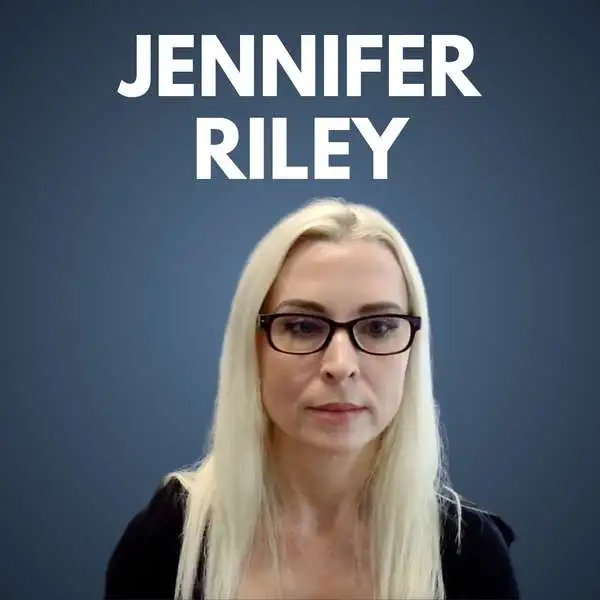
Jennifer McCoy Riley, LCSW-R, is Director of Behavioral Health at Zucker Hillside Hospital and has more than 20 years of experience across clinical care and behavioral health operations. Her work focuses on improving patient access, strengthening clinical operations, redesigning workflows, and helping multidisciplinary teams navigate organizational change.
Visit Jennifer Riley on LinkedIn to learn more about her experience in behavioral health.
Episode FAQ
What makes change management in behavioral health so challenging?
According to Jennifer Riley, many leaders think of change as surface-level, like switching to a new software platform. In reality, transformation upends deeper assumptions about how teams work and why processes exist. Behavioral health adds another layer, since clinicians naturally want to protect people’s feelings, which can slow down necessary decisions if leaders focus too heavily on keeping everyone happy.
How can leaders get staff buy-in during a major organizational change?
Jennifer recommends setting the stage early by explaining where the organization is now, where it’s going, and why the change is needed. From there, leaders should plan as much as they can, give the idea time to take hold, and share regular updates with transparency throughout the process.
What should organizations focus on during an EHR transition?
Rather than recreating old workflows in a new system, Jennifer encourages teams to examine why existing processes were built the way they were and whether they still make sense. An EHR transition is an opportunity to rebuild processes in a more efficient way instead of carrying over “how we’ve always done it.”
Why is it hard to recruit and retain behavioral health professionals?
Jennifer explains that the work can be emotionally draining and isn’t always compensated as well as it should be, a challenge that’s even greater in high-cost areas like New York and California. Large organizations may also seem difficult to break into from the outside, and many don’t do enough community outreach to find new talent, even when strong growth opportunities exist internally.
Episode Transcript
View the full transcript
Timothy Zercher 0:00
Jennifer, thank you so much for joining us. We really appreciate it.
Jennifer Riley 0:03
I’m so excited to be here. Thanks for inviting me.
Timothy Zercher 0:06
Absolutely. Absolutely. So, first question I always like to ask our guests is what first drew you into behavioral health? What made you realize this is the work that you wanted to dedicate your career to?
Jennifer Riley 0:14
Yeah. Well, I grew up in a family in which my grandfather on my dad’s side was schizophrenic, and my aunt, which was his daughter, was she also had schizophrenia. And I found at a young age I was just very intrigued by mental health and behavioral health. And then going to college, I went to an Ivy League school where you would think that everyone was in perfect mental health. And I learned then saw over the course of four years that there were many young people who were struggling, a lot of which was due to what I perceived at the time was family pressure and societal pressure on what a Princeton graduate should do and how they should behave. And I just found it fascinating. And then after college, I started working for a city agency in this New York City investigating police misconduct. And I thought that the folks that I was interviewing, who, a lot of whom had mental health issues, I thought that it was just interesting that how things came to be for them and their experiences of the world. And I ended up going to a graduate school for social work and got my MSW and then started my clinical career and now in leadership. And I’m still intrigued, I would like to say. Of course, helping people is almost like a duh, right? So you ask people ask you why you go into mental health, and a lot of people’s answers are like, well, to help people, and it’s like, yeah, duh. That shouldn’t even need to be said. But also just trying to make inroads in ways that that we can, and here we are.
Timothy Zercher 1:58
Yeah, I love that. I love that. And it’s a hard story, but I think it makes a lot of sense of why you have so much passion for the career and for the work. Yeah. So you’ve led both clinical teams and large operational really transformations. What leadership lesson has had like the biggest impact on the way you build those high-performing teams?
Jennifer Riley 2:19
Yeah, I think that change management is something that people think of intellectually and they might think that they understand how change management works. They think, well, we’re switching over to a new electronic health record or something. And that superficial change of just technology and a different platform is all that needs to change. And the the truth is so many assumptions about how we work, why we do the things we do, why we might have done things a certain way, all of those things are upended in change transformation. And I’m not sure that everybody really appreciates just how deep the change actually goes. I believe that the biggest lessons around leadership for change transformation are setting the stage early with people to let him know that, hey, this is the ground that we were on. We’re looking to go here. This is why we need to make this change, especially in the behavioral health world when you have clinicians and people who want to protect people’s feelings, and those things are all important. And getting buy-in is important. But at the same time, getting caught up in trying to make everybody happy and then leading to inertia and not making hard decisions that need to be made can really slow down and impact negatively the change transformation that you’re trying to put into place. And you need to be able to plan it out to the extent you can, plant the seed for people, let the seed germinate, let the plant grow, and give people updates along the way of and transparency. And all of those things are truly important to me about leadership and a big change management and operations. Transformation.
Timothy Zercher 4:20
Absolutely. Absolutely. So you often talk about doing exactly that, right? Turning strategy into execution. What is one operational change that you led that made a bigger difference than you actually expected?
Jennifer Riley 4:34
Well, I think that when we’ve been in organizations where we are having big organizational change, and there were ways of doing things in the previous way, in the previous world, and then post-the new world, a lot of people want to continue their old way into the new way. And I have really tried to focus in my career on making the case for taking a look at why the old way, maybe it worked in that time, but that we have an opportunity in the new world to take a look at what we were doing, see if there were any adjustments that could and should be made, and then executing that. And then not being wedded to, well, this is just kind of how we’ve always done it, and we should continue to do it in this new world. And more specifically, I’m speaking of like transitioning from one electronic health record to a new electronic health record. Just the system itself is different, but trying to break down where the old processes were and how we can re-implement them in a new and more efficient and better way in the new system is what I’ve been very passionate about.
Timothy Zercher 5:53
Absolutely. And about it has a carry-on effect, right? Because you’ve adjusted the processes, the whole process is more efficient, more effective, not just the electronic record piece of it.
Jennifer Riley 6:03
Yeah. And I think people very much focus on the patient experience, and that’s so important. And don’t always think that by improving your own internal processes, that will have the effect of a better patient experience. So there are a lot of indirect or unintended positives around looking at change, change management and in your internal processes. So that are not just patient-facing.
Timothy Zercher 6:32
Yeah, that makes sense. That makes sense. So what have you found is the hardest part of growing either an organization or a team? Because I know you’ve been involved in both.
Jennifer Riley 6:41
Yeah, I think the hardest part is trying to appeal to every different type of worker or staff member that might have long ties somewhere to the newer folks, and trying to get everybody rowing in the same direction all the time. There’s so many competing forces in healthcare in general, but also behavioral health care, and then just the world that we live in today and regulatory things that change. And I think too that like there are people who are very much comfortable in being part of a team and are not necessarily looking to move up or become leaders. And then so trying to hold multiple people’s experiences and aspirations in mind at the same time while working toward a common goal, which is for us, you know, caring for patients and in every level of care for that we have, and while also trying to appeal to each person about what personally motivates them to continue in the work that we do. So it’s hard. It’s very hard.
Timothy Zercher 7:54
Absolutely. And since we’re a marketing team, we always suggest all the marketing questions about your organization. The first one is right now for your organization, outside of word of mouth, what works best when it comes to client or talent acquisition, either one.
Jennifer Riley 8:09
I think that we have a huge footprint in our organization in New York. And so just the footprint itself and the breadth and scope of services and in every level is in itself a draw to people. But I do think that it can also be a curse sometimes when you have such a huge organization, because a lot of times from the outside, people might not think that they have a chance to get into, to break in or and within the organization, there’s a lot of opportunity to move around and move up, but it’s sometimes hard to break in from the outside as well as I don’t think all organizations are always the best at reaching out to into the community to find other sources of talent.
Timothy Zercher 8:59
Very true. Well, and I think too, a lot of organizations really struggle to incorporate new talent once they’ve joined. And it sounds like you have really thought that through at your Yeah, yeah, we do.
Jennifer Riley 9:09
And there is a lot of opportunity to for self-learning and creativity as far as like your career experience and all of that. So yeah, the opportunities are there. I’ve worked in a lot of places, so I think that the talent retention for therapists, social workers, anybody working in the mental health space or substance use space, the retention piece is a real challenge, like in what no matter what organization you’re in. I happen to work in a for-profit organization now, but I’ve also worked in non-for-profits, and it’s the same, you know, it’s a lot of the same story, like because just the the nature of the work itself can be draining for people and isn’t always as well compensated as people would like it to be. And so it can definitely be a challenge to to retain the a space, especially like in New York, it’s also California very expensive to live.
Timothy Zercher 10:06
Yeah. Which just makes the low pay a much, a much harder pill to swallow, even if you’re passionate about the work.
Jennifer Riley 10:12
Right.
Timothy Zercher 10:12
That makes some makes complete sense. Well, thank you so much, Jennifer. I appreciate you joining us. Appreciate you uh sharing some of your experience.
Jennifer Riley 10:18
Thank you so much for having me. Happy to come back anytime.
Timothy Zercher 10:21
Absolutely.