

Serving Providers Statewide
Behavioral Health Marketing in Oregon
Trusted by Leading Behavioral Health & Medical Brands


Oregon's Behavioral Health Landscape
Oregon organizes Medicaid around regional coordinated care organizations, and that shapes how a provider is found.
Oregon Health Plan coordinated care organizations, or CCOs, cover medical, dental, and behavioral health care, and most members enroll in one. Eligible American Indian and Alaska Native members may receive state-paid services outside a CCO.
Opioid settlement money splits 45 percent state and 55 percent local. The Opioid Settlement Prevention, Treatment and Recovery Board decides allocations from the state fund, which is continuously appropriated to the Oregon Health Authority. SAMHSA's 2023 survey reported 17 treatment facilities classified as CCBHCs in Oregon, and suicide ranked as the 8th leading cause of death in 2024.
Search demand is modest. The Portland substance use term draws 170 searches a month at difficulty 49, exactly the metro median, and the ABA term draws 20.
Mental health, substance use, ABA and autism, and IDD providers all sit inside a CCO's region, and marketing works best when it starts there.
Sources: Oregon Health Authority; NASHP state opioid settlement tracker, 2025; SAMHSA N-SUMHSS 2023; CDC NCHS state profile, 2024; Semrush, September 2026.
Oregon Behavioral Health Marketing Snapshot
Market structure
- Medicaid program: Oregon Health Plan (Public, Oregon Health Authority)
- Medicaid delivery model: Coordinated care organizations covering medical, dental, and behavioral health (Public, Oregon Health Authority)
- Tribal pathway: Eligible American Indian and Alaska Native members may receive state-paid services outside a CCO (Public, Oregon Health Authority)
- CCBHC-classified facilities: 17 in SAMHSA's 2023 survey, self-reported (Public, SAMHSA N-SUMHSS 2023)
- Suicide rank: 8th leading cause of death, 2024 (Public, CDC NCHS)
- Opioid settlement split: 45% state, 55% local governments (Public, NASHP 2025)
Market economics
- Substance use search demand, Portland: 170 searches a month, difficulty 49 (Public, Semrush, September 2026)
- ABA search demand, Portland: 20 searches a month (Public, Semrush, September 2026)
How Oregon compares
- Report tier: 3 of 5 on our editorial scale (Modeled, method)
- Cost per lead, substance use disorder: $52 to $70 (Modeled, method)
- Cost per lead, mental health: $20 to $28 (Modeled, method)
- Cost per lead, ABA and autism services: $27 to $37 (Modeled, method)
- Metro median keyword difficulty, all 51 markets: 49 substance use, 18 ABA (Public, A-Train benchmark report from Semrush, 2026)
Modeled rows use A-Train's national observed cost per lead adjusted by an editorial state tier. They are planning estimates, not measured Oregon results; see the method and its limits.
Tim Zercher's Take on Oregon

Oregon is a small search state, and I would plan that way. Portland's substance use term draws 170 searches a month at difficulty 49, and the ABA term draws 20. Ranking matters less here than what happens when someone calls: how fast a person answers, and whether the next step is clear.
Where the leverage sits is regional. Most Oregon Health Plan members are enrolled in a coordinated care organization that covers behavioral health with medical and dental care, so the CCO in your region shapes who hears about you. With limited dollars, I would invest in that relationship and in community education first.
Nicholas Stavros described the same approach on our podcast: helping local leaders and communities understand treatment, then tracking where people actually heard about it.
Basis for this assessment: conversations with Oregon providers and leaders and Tim Talks: Behavioral Health interviews. No Oregon client results are claimed.
Voices from Oregon Behavioral Health
Tim Talks: Behavioral Health
A fast-paced podcast featuring candid, 10-minute conversations with leaders across the behavioral health field.
One Tim Talks guest speaks to Oregon from a multistate substance use treatment provider that lists Oregon among its states of operation.
Nicholas Stavros, CEO, Community Medical Services
Nicholas Stavros is CEO of Community Medical Services, a multistate substance use disorder treatment provider with operations in Oregon. He brings an executive perspective to treatment access, organizational growth and community engagement, connecting behavioral health marketing with stigma reduction and referral relationships.
On the episode he discusses expanding treatment while protecting quality, stigma as an obstacle to care, and how community relationships, public education, and visits from local leaders make services more understandable. He also describes tracking where people hear about treatment to guide outreach. As he put it, "we're not out there to sell a product, we're out there to be a solution".
In this episode: 04:31 stigma and evidence, 09:48 community outreach and public officials, 13:14 tracking acquisition sources.
That approach suits a CCO state, where community understanding and measured outreach do more than raw volume.
Listen to Nicholas Stavros on Tim Talks: Behavioral Health
The quote is verbatim from the published transcript. Mr. Stavros is not an A-Train client, Community Medical Services lists Oregon among its states of operation, and he is not presented as an Oregon-based provider.
What This Means for Behavioral Health Providers in Oregon
Build around your regional CCO
Oregon Health Plan coordinated care organizations cover medical, dental, and behavioral health care, and most members enroll in one. Identify the CCO for each region you serve, learn its behavioral health priorities, and give its care coordinators current information on services, eligibility, and availability.
From: Oregon Health Plan CCO structure.
Settlement money is mostly local
Oregon sends 55 percent of settlement money to local governments, and a state board decides allocations from the rest through the Oregon Health Authority. Organizations hoping to join funded prevention, treatment, or recovery work should know their county's priorities and make their capabilities easy to find.
From: Oregon settlement structure.
Treat search as intent, not volume
Portland's substance use term draws 170 searches a month at difficulty 49, and the ABA term draws 20. Modeled cost per lead in Oregon sits in tier 3, at $52 to $70 for substance use. Small, high intent search markets reward fast response and strong conversion more than ranking position.
From: Semrush metro data; report tier; modeled cost per lead.
Our Behavioral Healthcare Marketing Services









The Benefits of Working With a Specialist Healthcare Marketing Agency:
The Problem
Generalist Agency

Our Approach
A-Train Marketing

Relevant A-Train Proof and Services
Closest published work
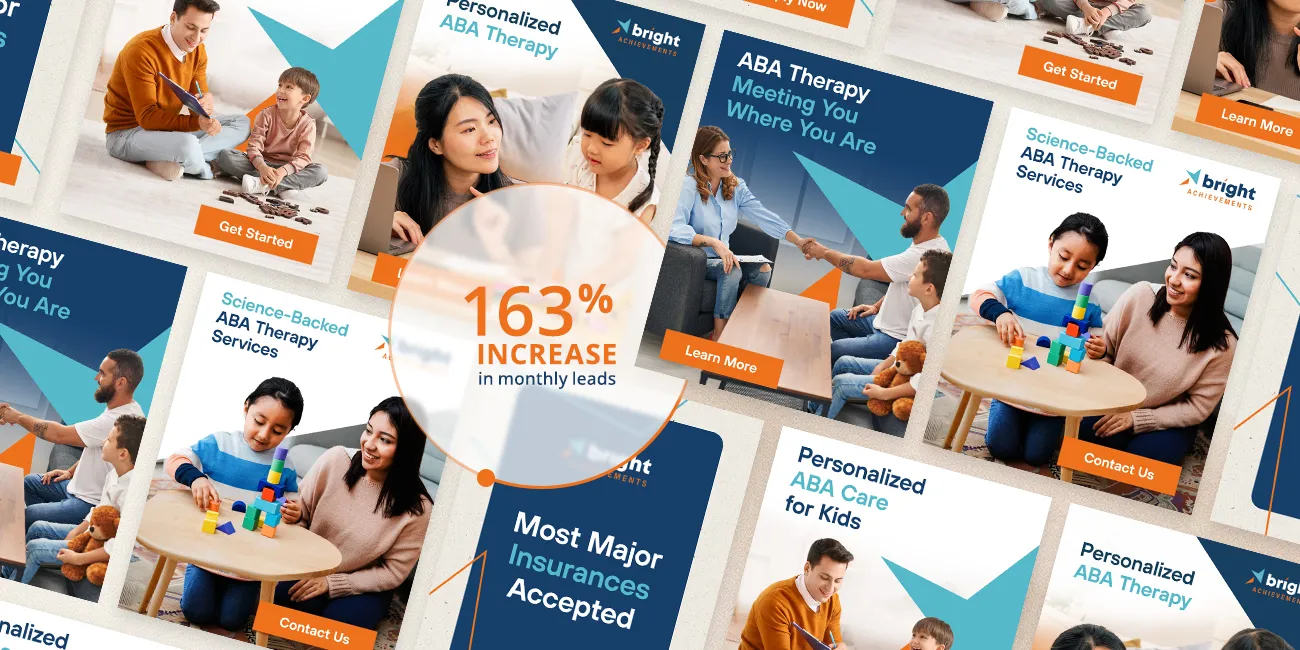
We do not publish Oregon results. Our MedMark Treatment Centers work, for a multistate opioid treatment provider, grew organic conversions 92 percent.
Converting small search markets
Where search volume is small, conversion carries the load. Salience Health cut cost per new patient lead 63 percent in six months, and Hilltop Behavioral Health is our published example of turning organic traffic into conversions.
Timing and services
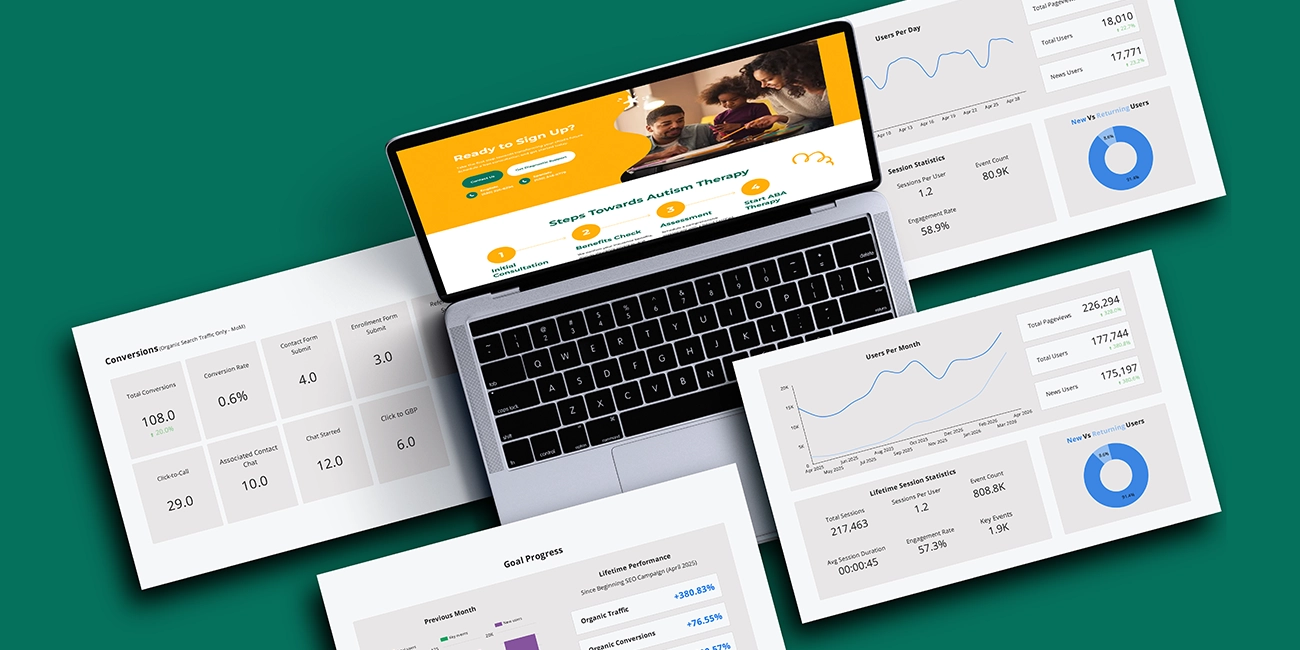
Conversions trail traffic by two to three months in our cohort. Services matched to Oregon: public health marketing, SEO and AIO, and behavioral health marketing.
Oregon Behavioral Health Marketing, Answered
How do coordinated care organizations affect behavioral health marketing in Oregon?
Oregon Health Plan coordinated care organizations cover medical, dental, and behavioral health care, and most members enroll in one, while eligible American Indian and Alaska Native members may receive state-paid services outside a CCO. For a provider, the CCO in each region is a central referral and contracting relationship, so outreach works best when it is built region by region.
What rules govern behavioral health advertising in Oregon?
This page summarizes the federal rules; state licensing rules for your service line also apply. At the federal level, the Eliminating Kickbacks in Recovery Act (18 U.S.C. 220) applies to all payers and does not protect compensation that varies with referral volume or amounts billed, and Google, Meta, Microsoft, and Nextdoor require LegitScript certification for addiction treatment ads. This is a summary, not legal advice. Confirm current requirements with counsel.
What should an Oregon provider expect in the first six months?
Organic movement around month three and material results around month six, with conversions two to three months behind traffic in our cohort. In small search markets like Portland's, the lever you control immediately is conversion: answering quickly and making the next step clear while rankings build in the background.
Is cost per lead lower in Oregon?
Our model places Oregon in tier 3 of 5, an editorial judgment rather than a market measurement, which gives lower planning ranges than tier 1 states: $52 to $70 for substance use disorder, $20 to $28 for mental health, and $27 to $37 for ABA and autism services. Treat them as starting estimates and replace them with measured results as soon as you have them.
Does A-Train work with Oregon providers?
We serve behavioral health organizations nationally from Colorado. We have no published Oregon results, so this page uses national observed results and modeled estimates, each labeled, and we will be direct about that from the first conversation.



Schedule a FREE 30-Min Discovery Meeting

Matt Harrington, BCBA, LBA
Growth Strategist