

Serving Providers Statewide
Behavioral Health Marketing in New Jersey
Trusted by Leading Behavioral Health & Medical Brands


New Jersey's Behavioral Health Landscape
New Jersey's behavioral health system is in the middle of a structural change, and providers marketing here are planning against a moving target.
NJ FamilyCare is integrating behavioral health services into its medical managed care organizations in phases. Phase 1 began January 1, 2025, and the state is planning two more. Which payer manages a given service, and how referrals and authorizations work, can shift as each phase lands.
New Jersey also treats paid referrals as a crime. Since 2021, paying or receiving a fee tied to referrals to substance use treatment facilities has been a fourth degree crime, and a 2025 amendment extended the law to recovery residences and clinical laboratories.
Opioid settlement money splits evenly between the state and local governments, with the Department of Human Services leading the Opioid Recovery and Remediation Trust Fund on an advisory council's recommendations. SAMHSA's 2023 survey reported 10 treatment facilities classified as CCBHCs in New Jersey.
Every service line feels this, from mental health and substance use treatment to ABA and autism services and IDD supports: payer rules need frequent checking, and referral arrangements need to be simple enough to explain.
Sources: New Jersey Division of Mental Health and Addiction Services; N.J.S.A. 2C:40A-6 and P.L.2025, c.121; NASHP state opioid settlement tracker, 2025; SAMHSA N-SUMHSS 2023.
New Jersey Behavioral Health Marketing Snapshot
Market structure
- Medicaid program: NJ FamilyCare (Public, New Jersey DHS)
- Behavioral health integration: Phased move into medical managed care organizations, Phase 1 began January 1, 2025 (Public, New Jersey DHS)
- Referral fee law: Fourth degree crime under N.J.S.A. 2C:40A-6, extended in 2025 to recovery residences and labs (Public, New Jersey Legislature)
- CCBHC-classified facilities: 10 in SAMHSA's 2023 survey, self-reported (Public, SAMHSA N-SUMHSS 2023)
- Opioid settlement split: 50% state, 50% local governments (Public, NASHP 2025)
Market economics
- Substance use search demand, Newark: 90 searches a month, difficulty 17 (Public, Semrush, September 2026)
- ABA search demand, Newark: 40 searches a month, difficulty 10 (Public, Semrush, September 2026)
How New Jersey compares
- Report tier: 1 of 5 on our editorial scale (Modeled, method)
- Cost per lead, substance use disorder: $78 to $105 (Modeled, method)
- Cost per lead, mental health: $31 to $41 (Modeled, method)
- Cost per lead, ABA and autism services: $41 to $55 (Modeled, method)
- Metro median keyword difficulty, all 51 markets: 49 substance use, 18 ABA (Public, A-Train benchmark report from Semrush, 2026)
Modeled rows use A-Train's national observed cost per lead adjusted by an editorial state tier. They are planning estimates, not measured New Jersey results; see the method and its limits.
Tim Zercher's Take on New Jersey

New Jersey surprised me. In a state where modeled paid costs sit in our top tier, organic search is unusually open: the Newark substance use term sits at difficulty 17, about a third of the metro median, and the ABA term at 10.
Our work with Overcome Wellness & Recovery, a New Jersey client, shows what consistent organic work can do here, with organic traffic up 95 percent in a six month period. With a small budget, I would start the same way: content and local search that answer what families and referral partners actually ask, with paid search filling gaps.
The caution is structural. NJ FamilyCare is still moving behavioral health into managed care in phases, and the 2025 amendment pulled recovery residences and labs into the referral fee law. Keep intake information current after every phase, and keep referral arrangements simple enough to explain to a regulator.
Basis for this assessment: A-Train's work with Overcome Wellness & Recovery in New Jersey and conversations with New Jersey providers and podcast guests. The organic result is one client's, not a statewide measurement.
Voices from New Jersey Behavioral Health
Tim Talks: Behavioral Health
A fast-paced podcast featuring candid, 10-minute conversations with leaders across the behavioral health field.
Two Tim Talks guests speak to New Jersey from both sides of its behavioral health market: community mental health and substance use services, and ABA for families.
Dr. Tara Chalakani, CEO, Preferred Behavioral Health Group
Dr. Tara Chalakani is CEO of Preferred Behavioral Health Group, a provider of mental health and substance use services in New Jersey. Her leadership perspective emphasizes mission, community needs and sustainable organizational growth, connecting strategy with workforce support and trusted partnerships.
On the episode she describes nonprofit leadership grounded in mission and accountability, how funding and pay constrain retention even when staff value the culture, and marketing built on consistent branding, employee advocates, and a steady cadence of newsletters and events.
"Well, I think that sticking to your mission is critical."
Dr. Tara Chalakani, CEO, Preferred Behavioral Health Group, on Tim Talks: Behavioral Health
In this episode: 01:29 mission during growth, 04:41 funding and compensation challenges, 07:05 consistent branding on a limited budget.
Listen to Dr. Tara Chalakani on Tim Talks: Behavioral Health
Joseph O'Keefe, BCBA, Founder and CEO, Compass ABA Therapy
Joseph O'Keefe is Founder and CEO of Compass ABA Therapy, serving New York and New Jersey. With more than 20 years in autism and ABA, he connects responsible growth, payer workflows and staffing with clear family communication.
On the episode he describes launching Compass ABA to respond to New Jersey families during the pandemic, preparing for payer requirements, and choosing staffing fit over promising immediate service.
"Hiring and retention is still the number one challenge facing an ABA company."
Joseph O'Keefe, Founder and CEO, Compass ABA Therapy, on Tim Talks: Behavioral Health
In this episode: 00:07 New Jersey origin, 03:48 payer preparation, 05:05 staffing and family waits.
Listen to Joseph O'Keefe on Tim Talks: Behavioral Health
The two episodes share one lesson for New Jersey: growth is capped by staffing before demand, so marketing that also recruits and retains people earns its budget twice.
Quotes are taken verbatim from the published transcripts. Dr. Chalakani and Mr. O'Keefe are not A-Train clients, and their views describe their own organizations rather than New Jersey overall.
What This Means for Behavioral Health Providers in New Jersey
Recheck payer rules as integration phases land
NJ FamilyCare began moving behavioral health into medical managed care organizations on January 1, 2025, with two more phases planned. Referral paths, authorizations, and plan relationships can change with each phase. Review intake scripts, payer pages, and plan outreach after every phase rather than once a year.
From: NJ FamilyCare integration timeline.
Newark organic search is unusually open
The Newark substance use term sits at difficulty 17 and the ABA term at 10, against metro medians of 49 and 18. Volumes are modest, at 90 and 40 searches a month, but terms this uncontested reward organizations that publish useful local content, especially where modeled paid costs sit in tier 1.
From: Semrush metro data; benchmark report metro medians; report tier.
Keep referral arrangements volume blind
New Jersey makes paying or receiving referral fees for substance use treatment a fourth degree crime, and a 2025 amendment extended that to recovery residences and clinical laboratories. Payments that do not vary with patient volume, services, or benefits paid fall outside the prohibition. Have counsel review any arrangement before it starts.
From: N.J.S.A. 2C:40A-6; P.L.2025, c.121.
Our Behavioral Healthcare Marketing Services









The Benefits of Working With a Specialist Healthcare Marketing Agency:
The Problem
Generalist Agency

Our Approach
A-Train Marketing

Relevant A-Train Proof and Services
New Jersey results
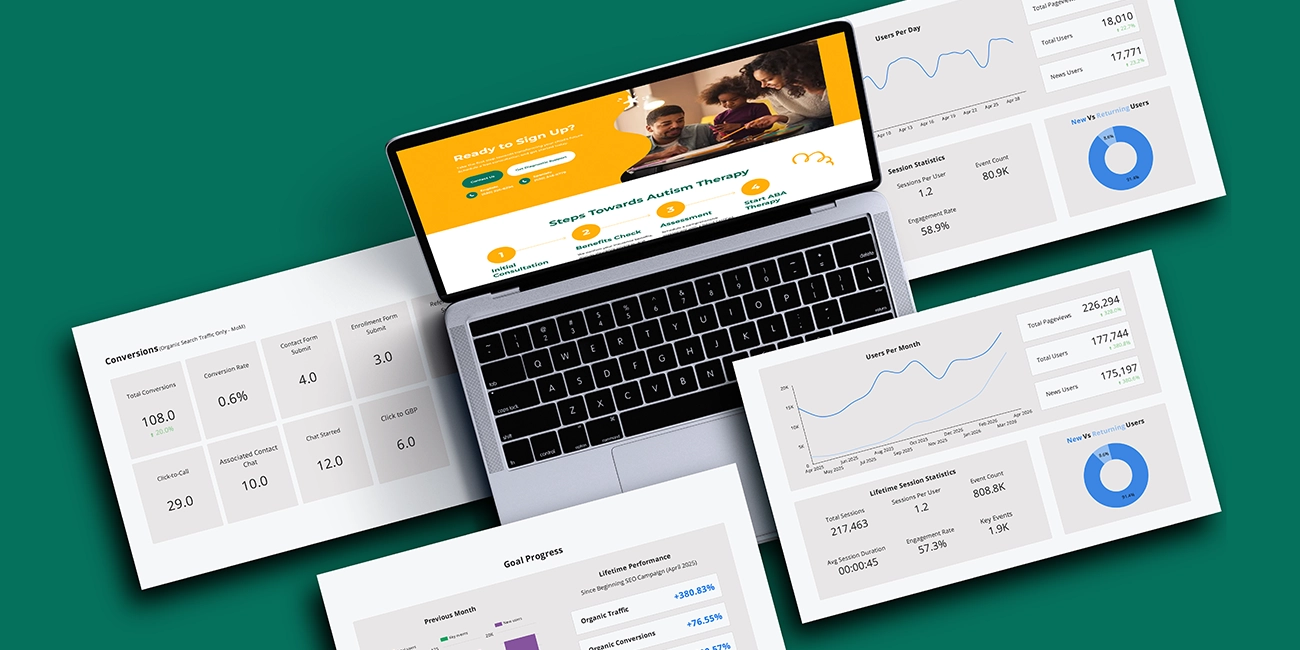
We work with Overcome Wellness & Recovery in New Jersey. Our Overcome Wellness case study shows organic traffic up 95 percent in a six month period.
Lowering paid costs
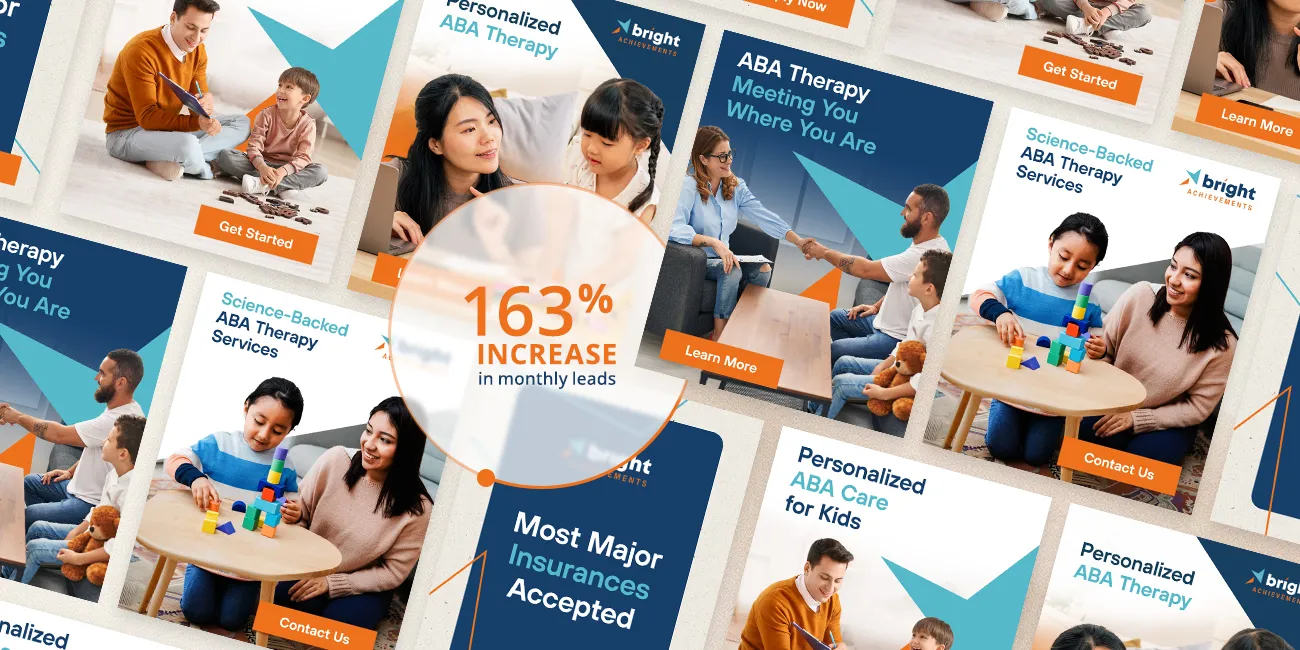
Where paid search still matters, Rooted Behavioral Health cut cost per lead 64 percent in its first 90 days with A-Train.
Timing and services
Our cohort typically reaches about three times baseline organic sessions by month three. Services matched to New Jersey: SEO and AIO, web design and development, and recovery and addiction treatment marketing.
New Jersey Behavioral Health Marketing, Answered
How is behavioral health integration changing NJ FamilyCare?
NJ FamilyCare is moving behavioral health services into its medical managed care organizations in phases. Phase 1 began January 1, 2025, and the state is planning two additional phases. For a provider, that means the payer responsible for a service, and the referral and authorization rules attached to it, can change as phases roll out. Confirm current rules with each plan before updating intake or marketing materials.
What does New Jersey law say about referral fees?
Under N.J.S.A. 2C:40A-6, knowingly paying or receiving a fee, commission, or rebate for referrals to substance use treatment facilities is a fourth degree crime, and a 2025 amendment extended the law to recovery residences and clinical laboratories. Payments that do not vary with patient volume, services, or benefits paid are excluded. Federal rules sit on top of state law: the Eliminating Kickbacks in Recovery Act (18 U.S.C. 220) reaches every payer, and its exception fails when pay tracks referrals or billing. Addiction treatment advertisers also need LegitScript certification on the major ad platforms, while mental health, ABA, and IDD advertisers follow those platforms' general healthcare policies. This is a summary, not legal advice. Confirm current requirements with counsel.
When do results usually show up for a New Jersey provider?
Our client cohort shows organic sessions at roughly three times the month one baseline by month three, and Overcome Wellness & Recovery grew organic traffic 95 percent within a six month period. Low difficulty terms like Newark's can move faster than average, but conversions still trail traffic by two to three months, so judge a program at six months rather than six weeks.
How much should a New Jersey provider budget per lead?
New Jersey is placed in tier 1 on our report scale, the highest modeled cost band: $78 to $105 per lead for substance use disorder, $31 to $41 for mental health, and $41 to $55 for ABA and autism services. The placement is editorial, not measured. Low organic difficulty around Newark is one reason not to rely on paid search alone here.
Does A-Train work in New Jersey?
Yes. We work with Overcome Wellness & Recovery in New Jersey, whose published case study shows organic traffic up 95 percent in a six month period. Our team works from Colorado and supports organizations across mental health, substance use disorder, ABA and autism services, and IDD services.



Schedule a FREE 30-Min Discovery Meeting

Matt Harrington, BCBA, LBA
Growth Strategist