Watch This Episode
Listen
The Information Gap: Why Patients Forget What Clinicians Tell Them
Patients often leave a healthcare appointment with the right information—but not the understanding they need when questions arise later.
In this episode of Tim Talks: Behavioral Health, Timothy Zercher sits down with Mina G. Yacoub, PharmD, BCPS, Founder & CEO of Qik Productions, to discuss one of healthcare’s biggest blind spots: what happens after the patient leaves.
Drawing on his experience as a pharmacist, Mina shares why patient education shouldn’t end at the point of care and how healthcare organizations can improve patient engagement in healthcare by delivering educational content when patients need it most. He also explains how engagement analytics can strengthen patient education without losing the human connection, the challenges of building a healthcare startup, and why solving the right problem matters more than selling the right product.
Whether you’re a behavioral health leader, clinician, or healthcare innovator, this conversation offers practical insights into improving patient understanding and engagement beyond the exam room.
Why patients forget critical healthcare information after appointments
Even when clinicians explain things well, patients are often absorbing a new diagnosis, a new medication, or a stressful situation all at once — and that’s a lot to take in during a single visit. As pharmacist and Qik Productions founder Mina Yacoub puts it, questions don’t stop when the appointment ends; they often begin once the patient gets home and real life resumes. This is why organizations focused on patient engagement in healthcare are moving education beyond the exam room — into videos, patient portals, and text reminders patients can revisit exactly when a question comes up.
How continuous education improves patient understanding and adherence
The most effective healthcare organizations don’t treat education as a single conversation — they treat it as an ongoing resource. Yacoub notes that engagement analytics (which videos patients watch, where they stop, which topics they replay) aren’t the end goal; they’re a feedback loop that shows where patients need more support. When organizations track that signal and respond to it, education becomes something patients can return to for a refresher or reassurance, not just a one-time handout.
Why successful organizations focus on problems before solutions
Rather than leading with a pitch, Yacoub’s approach is to spend time with healthcare leaders — hospitals, specialty pharmacies, infusion centers, patient support organizations — simply listening to where patients struggle and where clinicians repeat themselves most. That problem-first mindset, she says, is what lets an organization build something that actually fits a specific need rather than forcing a generic solution. It’s a reminder that the strongest marketing and growth strategies come from genuine understanding, not features-first selling.
About Our Guest: Mina G Yacoub PharmD BCPS
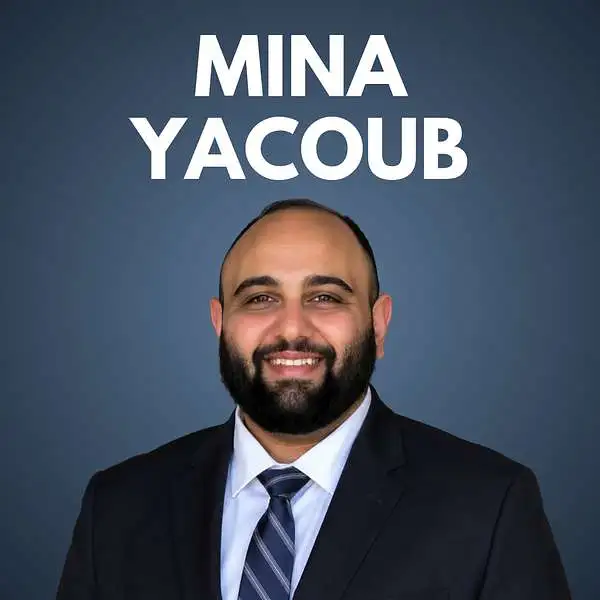
Mina G. Yacoub, PharmD, BCPS is the Founder & CEO of Qik Productions and a practicing pharmacist dedicated to improving patient education beyond the point of care. Through pharmacist-reviewed educational videos and engagement analytics, she helps healthcare organizations deliver accessible, on-demand education that patients can revisit when they need it most. Mina is passionate about closing the gap between what clinicians explain and what patients actually understand, improving both patient outcomes and the healthcare experience.
Visit the Qik Productions website to learn more.
Episode FAQ
Why do patients forget information after a healthcare appointment?
Patients are often absorbing a lot at once — a new diagnosis, a new medication, or a stressful situation — during a visit that only lasts a few minutes. Even when clinicians explain things clearly, there’s a limit to how much anyone can process and retain in a single sitting. Questions tend to surface later, once the patient is home and real life resumes.
Is poor patient understanding a result of bad communication from clinicians?
Not necessarily. According to Mina Yacoub, the issue usually isn’t the quality of the explanation — it’s timing and volume. Clinicians may spend years learning something they then need to explain in minutes, and even well-delivered education can be hard to fully absorb in that window.
What can healthcare organizations do to help patients retain information?
The organizations that do this well don’t treat education as a one-time conversation. They extend it through videos, printed materials, patient portals, and text messages — resources patients can return to when a question actually comes up, rather than relying on memory from the appointment.
How does patient engagement data help improve education?
Engagement analytics — like which videos are watched, where patients stop watching, or which topics they rewatch — act as a feedback signal. They help identify where patients need more support and where the educational content might need adjusting. The metrics themselves aren’t the goal; the actions they inform are.
Episode Transcript
View the full transcript
Timothy Zercher
Mina, thank you so much for joining us. We really appreciate you taking time. Thank you so much. Absolutely. So you spent years as a pharmacist, but you chose to build a company around patient education. What was the moment that made you realize that understanding, not just gaining information, was the real problem?
Mina Yacoub
Sure. So one thing I kept noticing throughout my career as a pharmacist was the patients would leave with good information, but a few days later, as you would come having questions. It wasn’t because clinicians were not doing a good job explaining things. Patients just were often processing a new diagnosis, a start of a new medication, or dealing with a stressful situation. That’s a lot for anyone to absorb in a single visit. So over the time, I realized that the challenge wasn’t simply because patients, because, you know, given the patient information, it was helping them understand it and remember it and have a way to revisit it when they actually needed it. So that realization is what eventually led me to start quick productions.
Timothy Zercher
I love that. And you often talk about that gap between what clinicians explain and what patients like actually remember. What have you learned about why that gap exists and how healthcare organizations can kind of close that gap?
Mina Yacoub
Sure. So I think the gap exists because patients are often receiving tremendous amounts of information during a small period of time. As healthcare professionals, we may spend years learning something and then try to explain it in a few minutes. Even when education is delivered very well, it could still be difficult to absorb everything in the same time. So patients would leave the clinic, the hospital, the pharmacy. And then when real life starts, that’s often when the questions begin, not when they end. So the organizations that do seem to do this well don’t view education as a one-time conversation. They continue supporting patients through resources like videos, random materials, patient portals, text messages, and other resources that patients can access when they need them.
Timothy Zercher
Yeah, that makes complete sense. I know that kick production or quick productions combines healthcare education with engagement analytics. How do you balance the measuring of patient engagement without losing sight of that human side?
Mina Yacoub
Analytics are really just a way to understand whether education is helping patients. So we can see things which videos are like, for example, is a video being viewed? How much each video is being watched? Is there a certain topic that somebody’s re-watching? If patients consistently stop watching at a certain point or keep coming back to the same topic, that tells you something. Yeah, it helps us improve the educational experience, identify the areas where patients need additional support. At the end of the day, analytics are not really the goal, they’re simply just a feedback tool that helps us understand whether we’re delivering the education in a way that’s useful and then meeting the patients where they really are.
Timothy Zercher
Yeah, yeah. It doesn’t, the engagement metrics are not the point, but it’s the actions behind the metrics.
Mina Yacoub
Absolutely.
Timothy Zercher
Yeah. So as an early stage founder, what has been the biggest challenges in bringing your company to market and gaining traction with healthcare organizations?
Mina Yacoub
So the biggest challenge has been probably been moving from recognizing a problem to actually starting to solve it. So as a healthcare professional, we’re trained to identify gaps and think about solutions. But building a company, it’s just very different from working within an existing healthcare system. There are a lot of unknowns. So you’re building something from scratch, testing assumptions, talking to potential customers, constantly learning. For me, one of the biggest lessons has been staying focused on the problem. And I’m trying to solve, you know, and not get distracted by every opportunity that comes along. Early on, it’s easy to get pulled in different directions. So that’s what I’m working on right now.
Timothy Zercher
I love that. If you don’t mind, share a little bit what’s the number one problem that you’re trying to solve.
Mina Yacoub
I think patient understanding is something that’s huge. Again, because we explained to the patient the information, and I don’t even really know if they gained that information. There’s a lot of studies now out there that tells you that patients do not retain that much information once they leave. And then the second thing that I’m trying to resolve is also the engagement. So making sure that they’re actually looking at the resources that we’re providing them.
Timothy Zercher
Yeah, absolutely. So you’re in a uh a fairly competitive space. What works really well for your team when it comes to gaining new clients, gaining new partners?
Mina Yacoub
So right now, most of our growth has come from relationships and organic conversations, mainly. As a practicing pharmacist, I spend a lot of time talking with healthcare leaders at hospitals, specialty pharmacies, infusion centers, patient support organizations. But one thing I have learned is that everyone agrees that patient education is important. But many are still looking for a practical way to reinforce it, especially after the patient leaves. So for me, instead of leading with a sales pitch, I start learning and listening because I want to understand where patients are actually struggling and where clinicians are spending time repeating the same information and what challenges the organization is trying to solve. So, you know, those conversations usually would reveal opportunities where we can genuinely help because we do make everything as custom material. So I think people appreciate that we’re not trying to force a solution. We’re just trying to understand the problem first and where it fits, and we will build something to address that specific need.
Timothy Zercher
I love that. I love that. That problem first approach, I think, is what is what most technology-based companies fail to focus on. They’re all about here’s the thing that we do, and it’s so great. And let me tell you about all the features. And what really matters to clients is what the problem is that you solve. Yeah. Absolutely. I love that. So last question then is because we’re in this space, we have to ask some of these marketing strategy questions. What is one marketing strategy, marketing tactic that your team is either considering using right now or considering launching, or just watching really carefully in the marketplace?
Mina Yacoub
Sure. One thing that I’m watching closely is how patient education is becoming more integrated in the patient journey. So historically, education was often just a brochure, a paper or a packet, and you hand it to the patient at the end of the visit. But today, we’re seeing organizations deliver education differently through QR codes, patient portals, text messages, and other digital touch points that makes the education more available when patients actually need it. The content is important, but also I think the most important thing is the timing. Patients are more likely to engage with education when they can access it at the moment that they actually have the question, rather than trying to remember everything they heard during the appointment. So I think that’s where healthcare is heading. Education is not just something that you can deliver at once. The patient should be able to come back to throughout their journey, whether they need it as a refresher or as a reassurance.
Timothy Zercher
Love that. I love that. Well, thank you so much, Green. I really appreciate you taking time. I appreciate you coming on here and I appreciate the work that you’re doing for your partners.
Mina Yacoub
Thank you so much.