Watch This Episode
Listen
How Value-Based Care Is Transforming Healthcare Delivery
In this episode of Tim Talks: Behavioral Health, Timothy A. Zercher sits down with Dr. Mary O’Connor, Founder and Chief Medical Officer of Vori Health and former Chair of Orthopedic Surgery at Mayo Clinic Florida, to discuss why the healthcare system must shift toward value-based care.
“We have to start finding solutions. We can’t keep escalating the cost of healthcare, not clearly improving quality.” – Dr. Mary O’Connor
Transforming Healthcare Through Value-Based Care
Jennifer discusses how sound therapy can help individuals regulate their nervous systems in an increasingly overstimulating world. Through the use of sound frequencies, vibration, and intentional auditory experiences, sound therapy may help reduce stress and promote relaxation. The conversation explores how this approach can complement traditional mental health treatments by creating a calmer mental and emotional state, allowing individuals to better process emotions and engage in personal growth. As more behavioral health professionals seek holistic approaches to care, sound therapy continues to gain attention as a tool for supporting overall well-being.
Using Telehealth to Improve Access and Reduce Healthcare Costs
One of the central themes of the episode is the role telehealth can play in improving patient access to care. Mary explains how virtual care can help patients receive appropriate treatment earlier, particularly for musculoskeletal conditions, while avoiding unnecessary imaging, procedures, and surgeries. She shares how telemedicine creates opportunities to focus on prevention, education, and non-surgical treatment options that can improve outcomes while lowering costs for patients, employers, and health plans. The discussion highlights telehealth’s growing role in creating a more efficient and patient-centered healthcare experience.
Building High-Performance Teams in Healthcare Innovation
As a physician, founder, and healthcare leader, Mary has learned that successful innovation requires strong collaboration between clinicians and technology teams. She explains that healthcare solutions are most effective when every stakeholder works toward a shared goal of improving patient outcomes. The conversation also explores leadership strategies for creating high-performing teams, including adapting communication styles, maintaining employee engagement, fostering a growth mindset, and helping teams navigate challenges together. Mary emphasizes that successful organizations continually refocus their teams on a common mission and the impact their work has on patients and communities.
About Our Guest: Dr. Mary O’Connor
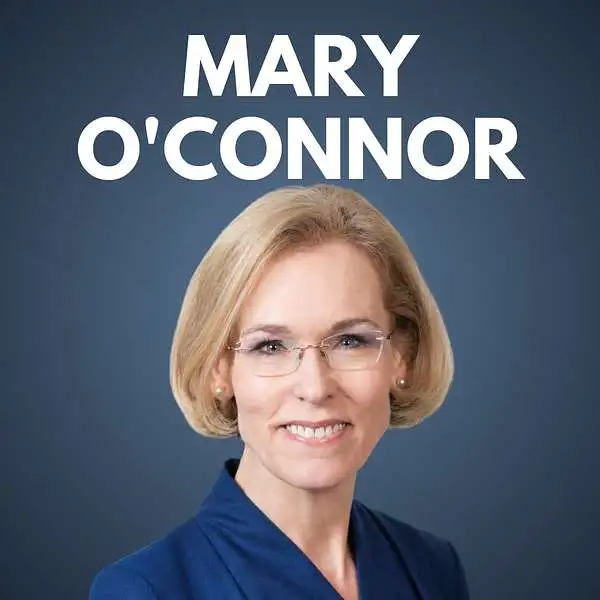
Mary O’Connor, MD is the Founder and Chief Medical Officer of Vori Health, a virtual-first musculoskeletal healthcare company focused on delivering value-based, patient-centered care. A nationally recognized orthopedic surgeon and healthcare executive, she previously served as Chair of Orthopedic Surgery at Mayo Clinic Florida and has held leadership roles in clinical innovation, healthcare transformation, and digital health. Dr. O’Connor is passionate about improving patient outcomes while making healthcare more accessible, affordable, and sustainable.
Visit the Vori Health website to learn more.
Episode FAQ
What is value-based care in healthcare?
Value-based care is a healthcare delivery model that focuses on improving patient outcomes while controlling costs. Rather than rewarding the volume of services provided, value-based care encourages providers to deliver effective, evidence-based treatments that improve quality and reduce unnecessary spending. Mary O’Connor discusses how healthcare organizations must continue moving toward models that prioritize patient outcomes and long-term value.
How can telehealth improve patient outcomes and reduce healthcare costs?
Telehealth can improve access to care by connecting patients with providers earlier in their healthcare journey. According to Mary, virtual care can help patients receive appropriate treatment, avoid unnecessary imaging and procedures, and explore non-surgical options before more invasive interventions are considered. This approach can improve outcomes while lowering costs for patients, employers, and health plans.
What makes a high-performing healthcare team?
Mary explains that high-performing healthcare teams are built through collaboration, communication, and shared purpose. Effective leaders adapt their communication styles to engage team members, encourage a growth mindset, and help teams learn from challenges rather than viewing setbacks as failures. Successful healthcare organizations keep everyone focused on the common goal of improving patient outcomes and experiences.
Why is healthcare innovation important for improving patient care?
Healthcare innovation is essential because it helps address rising healthcare costs, improve patient outcomes, and increase access to care. In the podcast, Mary O’Connor explains that the current healthcare system often rewards procedures, imaging, and surgeries rather than focusing on the most effective treatment for patients. She believes innovation is needed to transform how care is delivered so that patients can receive appropriate, evidence-based treatment earlier in their healthcare journey.
Episode Transcript
View the full transcript
Timothy Zercher
Well, Mary, thank you so much for joining us. We really appreciate you taking time.
Mary O’Connor
Delighted to be with you and your audience, Tim.
Timothy Zercher
Absolutely. Absolutely. So you’ve led major healthcare institutions, academic departments, and now a healthcare technology company. What originally inspired you to move beyond clinical practice and focus more on transforming healthcare systems as a whole?
Mary O’Connor
Well, when I was a clinically practicing orthopedic surgeon, I could help one patient, one family at a time. As you move up into other leadership positions where you can impact procedure, policy, vision, then you can impact a much larger number of people and families. And really, I think we all appreciate there’s so many flaws in our current healthcare system. And we really need innovation to transform the delivery of care. And in my clinical space, that’s orthopedics and spine or musculoskeletal is the term we use. And so it’s really my passion for trying to help make healthcare better for people.
Timothy Zercher
I love that. I love that. And you can make a larger impact too, right? One technology can, when applied widely, can have a huge impact.
Mary O’Connor
We have to start finding solutions. We can’t keep escalating the cost of health care, not clearly improving quality, driving higher out-of-pocket expenses for patients and families, employers having to pay more. I mean, this is just this vicious cycle that isn’t delivering what we want for a healthier country and healthier communities. So we need to do so much, but one aspect that we can clearly address is using telehealth as an easy access point for a lot of patients for most conditions. Now, not everybody is appropriate for telemedicine. We’re as our company, we recognize that. Not everyone is appropriate for non-surgical care, which is what we focus on. I’m a surgeon. I know some patients still need surgery. We refer patients to surgery. We’re not anti-surgery, we are anti-inappropriate surgery. And we still see a lot of inappropriate utilization happening in our system because it’s fragmented, because hospitals and health systems are financially generating their margin off of only certain service lines, which tend to be surgical service lines, procedures, advanced imaging. So if you do anything that says, hey, we’ve got too many inappropriate low back surgeries happening, the challenge there for health systems is that directly impacts their financial margin. And they need that margin from the, I’ll say the spine service line to offset the losses on the margins from the pediatric service line and the infectious disease service line and all the other things that you need to run a hospital and provide care to a community. So, yeah, many complexities.
Timothy Zercher
Yeah, no, and it makes complete sense. I want to dig deeper on that. You’ve been a champion for years, I know, for value-based care. What do you think most healthcare organizations still misunderstand about delivering those better outcomes while lowering costs?
Mary O’Connor
Oh, I think healthcare organizations understand it. They’re trapped in that classic Clay Christensen’s innovators dilemma where if they innovate to improve quality and drive down cost, it hurts their financial margin. Because remember, their margins are all dependent on elective surgeries, advanced imaging, and procedures. So we know that we can get a lot more people better without expensive imaging and surgery than what we do now. But the system is penalized for that. So we’re not at the tipping point yet where value-based payments will really help drive significant transformation. And that’s where we need to go. But it’s a big challenge because a lot of our infrastructure, meaning hospitals in particular, depend on the current payment model. Tim, I just have to say, I don’t think of hospitals and hospital leaders and administrators as bad people. They get it, they understand this bind that we’re in. But the reality is that systems won’t change unless they’re forced to change. And they will be forced to change when the finances favor the change.
Timothy Zercher
Absolutely. So I want to shift topics just a little bit. Since you’ve been both a physician and now a founder, what have you learned about bringing clinicians and technology teams together to create meaningful innovations, especially in the healthcare space, obviously?
Mary O’Connor
I’ve always felt that the only way we really advance and make true change is through team-based approaches because healthcare is not delivered by any single individual. I mean, it’s never even just the surgeon, it’s the surgical team. It’s never just a physician. It’s the nurses, it’s the aides, it’s everybody. And the same applies on the technology side. And so one thing I will say about telemedicine is at least for our company, we have always focused on we have to do this together. Technology and the clinical practice have to be joined together so that the product that we’re using works for our clinicians and more importantly, it serves our members and our patients. So you got to just from the start say that everybody has to be in this together, or you’re not going to create a product that’s going to work.
Timothy Zercher
Absolutely. And you want to have a product that generates actual results, right? Even if it technically functions, if everyone’s not aligned, it’s not going to actually serve the client better.
Mary O’Connor
Correct.
Timothy Zercher
Yeah. And what have you found is the hardest part about growing a team, focusing more on your some of your leadership experience?
Mary O’Connor
I think the hardest part about growing a team is dealing. Actually, I don’t think it’s hard to grow a team. I think the challenge is getting the team to be high performance. And in order to get the team to be high performance, you have to recognize and flex your communication style to reach people to keep them engaged. So I view it as the leader’s responsibility to flex their style to keep people engaged. And you have to be, and you have to be ready to deal with the little mini eruptions that happen where the team starts to go completely off the rail. And you got to bring them back and focus on when things are going south. This is not failure. This is our learning moment. Yeah. Right. To keep that kind of growth mindset, learning environment on the team to say, okay, what do we learn from this so that we can course correct and then get back on track?
Timothy Zercher
Complete sense. I think you’re completely right. It’s not hard to make a team. It’s hard to make a team that functions well. And they and they can handle adversity well, right? That’s not the term you use, but I think that’s the experience that a lot of people see is when you run into the wall, that’s where it gets a lot harder to work together well.
Mary O’Connor
Yeah, but then the other challenge is when everybody runs into the wall together, it’s like a team bonding moment, right? True. It’s when you run into the wall, and some people are saying, but we ran into the wall because of this aspect or because of you or this group, right? That’s when is the dynamics are a little bit more challenging, and you got to bring people back to here’s why we’re doing this, here’s why it matters, here’s why everybody on the team is important, and everybody is needed to drive to success, which means better patient outcomes, better experience for the patient. I mean, because in healthcare, it should always drive to that North Star.
Timothy Zercher
Absolutely. So I want to shift shift focuses a little bit. How do you go about gaining your clientele, your partners? Because you talked a lot about the struggles and the kind of anti-motivations that there are, but how do you find partners that we engage well?
Mary O’Connor
So, you know, this is my first entrepreneurial adventure with Vori Health, co-founding this company. And when we first started, my other co-founder is a spot, Ryan Grant, a spine neurosurgeon. We had a lot of connections with big surgical groups, and we went out to them and said, hey, we can help you. We can do all this non-surgical care for your patients, and then get the patients to you that need surgery. It was difficult, even when we had champions, surgeon champions within the groups. Physicians and surgeons, as a kind of as a culture, are resist change. Surgeons in particular are creatures of habit, right? I do this operation, I want my same instruments, I do it this way, it’s routine every time. Don’t move my cheese. So we quickly realized that this wasn’t the product market fit for us. And and where we found ready partners is with self-insured employers and now large insurance groups, because they recognize that they need to lower MSK care costs while also driving good clinical outcomes. This is particularly true for self-insured employers, because MSK expenses for them are always there, one, two, or three top tiers. And that’s because they employ the adult workforce and MSK conditions are so prevalent in adults prior to retirement. Then afterwards, for the I’ll say the traditional Medicare population, large insurers with Medicare Advantage plans are using us, and we’re doing population health contracts with them to help manage their MSK population. Because again, you know, like MSK is so common. And I speak from my own experience with my neck arthritis, a little knee arthritis. If you’re a surgeon, you probably don’t get through your career without developing some neck arthritis.
Timothy Zercher
Yep. Yep, absolutely. Well, and I mean, I’m only 33 now, and I have neck pain and lower back pain. Just talking about it, my shoulders are feeling.
Mary O’Connor
So, okay, Tim, you’re like a baby to me. So you will get no sympathy from me on that. But what’s the key? Here’s the key. The key, even at your age, it’s movement, movement, exercise, right? Keeping your core strong for your low back, right? Posture for your neck. I mean, there’s all kinds of things that are truly preventative, that we should move into the kind of prevention wellness space, which in the traditional system, nobody has the time to do that. Right. And we focus a lot on that in our telemedicine practice.
Timothy Zercher
I love that. I love that. I think that’s a really smart strategy to go after those different demographics that maybe weren’t the first instinct, but they make a lot of sense. Are there any marketing tactics or marketing strategies that you all are considering or just maybe watching in the marketplace when it comes to reaching those right fit potential partners?
Mary O’Connor
Well, obviously, we have a chief commercial officer in the sales team that goes out and talks to folks and we speak at conferences. And I’ll be speaking at one next month with one of our self-insured employers, 7-Eleven. We’ll be at the Houston Business Coalition meeting at the end of August, and we’ll be showing how our partnership has dramatically decreased the MSK spend for their members. And it’s been a pleasure to work with 7-Eleven and Mike Adams as their head of benefits. There, shout out to Mike Adams, who’s been a very innovative leader and really helped us create a partnership where we get further upstream in the experience of their members. And then we are so much better able to get that member into good non-surgical care, avoid inappropriate advanced imaging, avoid inappropriate surgeries, et cetera. They need a healthy workforce, right? We have to deliver on helping them have a healthy workforce. At the same time, right, they need to control their cost. And the way you do that is by addressing the inappropriate spend.
Timothy Zercher
Absolutely. Well, and often those inappropriate surgeries, imaging, etc., add more issues on top and make your workforce actually less happy, less engaged, less able to work by themselves.
Mary O’Connor
Yeah, there’s no free lunch with surgery. Every surgery carries with it the risk of complications, which of course no individual patient thinks that’s going to happen to them, but there’s always a risk, and there’s no surgeon that operates that doesn’t have complications. It’s terrible, but it’s part of the deal. And when we look at people that have low back surgery, it’s astonishing the high rate of return to the OR in the first year. I mean, some studies show that to be almost 8%. That’s mind-blowing to me.
Timothy Zercher
Yeah. Which not good odds, unless it’s necessary.
Mary O’Connor
Wow. So we have a lot of opportunity to do better. And that’s expensive care. And it’s and that’s care that can harm a patient, right? Or potentially harm a patient. As I said, we’re not anti-surgery, we’re just anti-inappropriate surgery. So we want to try and get people better when possible, right? Without the risk of surgical procedures.
Timothy Zercher
Yeah. I love that. I love that. Well, thank you so much, Jamary. I really appreciate you taking time. I appreciate the work that you all are doing. And thank you for coming on.
Mary O’Connor
My pleasure. Thank you.
Timothy Zercher
Absolutely.