

Serving Providers Statewide
Behavioral Health Marketing in New York
Trusted by Leading Behavioral Health & Medical Brands


New York's Behavioral Health Landscape
New York concentrates behavioral health funding and rules in a few places, and knowing which one applies is most of the work.
Health and Recovery Plans, or HARPs, are Medicaid managed care plans that integrate physical health, mental health, and addiction services for adults 21 and older who meet behavioral health eligibility criteria. HARPs cover an enhanced behavioral health benefit package and offer Health Home care management.
New York prohibits paid referrals for substance use treatment. Mental Hygiene Law 32.06 bars substance use providers and certified recovery residences from paying or accepting anything of value for patient referrals, with a carve out for marketing staff who identify whom they represent and limit themselves to education.
The Office of Addiction Services and Supports leads the Opioid Settlement Fund, with an advisory board recommending spending to the legislature. Allocations are divided among the state at 17.5 percent, regional and discretionary funds, county shares, and New York City at 20 percent. SAMHSA's 2023 survey reported 35 treatment facilities classified as CCBHCs in New York.
Plan eligibility, referral law, and settlement priorities differ by region and population, and they touch mental health, substance use, ABA and autism, and IDD providers in different ways.
Sources: New York State Office of Mental Health; New York Mental Hygiene Law 32.06; NASHP state opioid settlement tracker, 2025; SAMHSA N-SUMHSS 2023.
New York Behavioral Health Marketing Snapshot
Market structure
- Medicaid program: New York Medicaid (Public, New York OMH)
- Behavioral health managed care: Health and Recovery Plans for eligible adults 21 and older (Public, New York OMH)
- HARP features: Enhanced behavioral health benefits and Health Home care management (Public, New York OMH)
- Referral law: Paid substance use referrals prohibited under Mental Hygiene Law 32.06 (Public, New York Senate)
- CCBHC-classified facilities: 35 in SAMHSA's 2023 survey, self-reported (Public, SAMHSA N-SUMHSS 2023)
- Opioid settlement split: 17.5% state, 16.39% regional, 20% discretionary, 20% New York City, plus county shares (Public, NASHP 2025)
Market economics
- Substance use search demand, New York City: 260 searches a month, difficulty 55 (Public, Semrush, September 2026)
- ABA search demand, New York City: 260 searches a month, difficulty 17 (Public, Semrush, September 2026)
How New York compares
- Report tier: 1 of 5 on our editorial scale (Modeled, method)
- Cost per lead, substance use disorder: $78 to $105 (Modeled, method)
- Cost per lead, mental health: $31 to $41 (Modeled, method)
- Cost per lead, ABA and autism services: $41 to $55 (Modeled, method)
- Metro median keyword difficulty, all 51 markets: 49 substance use, 18 ABA (Public, A-Train benchmark report from Semrush, 2026)
Modeled rows use A-Train's national observed cost per lead adjusted by an editorial state tier. They are planning estimates, not measured New York results; see the method and its limits.
Tim Zercher's Take on New York

In New York I would start with a question most marketing plans skip: who actually decides where your next patient goes? For many adults with complex behavioral health needs, the answer includes a Health Home care manager working inside a HARP, not a search engine.
That changes where a small budget belongs. I would invest first in relationships with care managers and the referral partners around them, with clear availability, eligibility, and intake information they can act on.
Search still matters, but New York City splits into two very different markets. The substance use and ABA terms each draw 260 searches a month, yet difficulty runs 55 for one and 17 for the other. And for substance use outreach, I would make sure every staff member knows the line Mental Hygiene Law 32.06 draws between education and paid referral.
Basis for this assessment: conversations with New York providers and leaders and Tim Talks: Behavioral Health interviews. No New York client results are claimed.
Voices from New York Behavioral Health
Tim Talks: Behavioral Health
A fast-paced podcast featuring candid, 10-minute conversations with leaders across the behavioral health field.
One Tim Talks guest brings a view from a Rochester-based ABA organization that serves communities including Buffalo and Albany.
Shannon Carr, Owner and Managing Director, Living Soul of New York ABA
Shannon Carr is Owner and Managing Director of Living Soul of New York ABA, a Rochester-based provider serving communities including Buffalo and Albany. Her background connects school psychology with ABA practice, and she brings a New York perspective to clinical staffing, service quality across settings and the pediatric referral relationships that help families understand and access autism services.
The published episode covers services across settings, pediatric partnerships, and workforce challenges, including lunch-and-learns as a way to build relationships with pediatric offices and calendar time-blocking to protect clinical time.
In this episode: 02:49 lunch-and-learns, 06:34 time-blocking.
Her focus on pediatric referral relationships mirrors New York's structure, where professionals, more than search engines, often connect families to care.
Listen to Shannon Carr on Tim Talks: Behavioral Health
Ms. Carr joined our podcast as a guest and is not an A-Train client; her organization lists New York locations, and her perspective is hers alone.
What This Means for Behavioral Health Providers in New York
Market to care managers, not just consumers
HARPs integrate physical health, mental health, and addiction services for eligible adults 21 and older and include Health Home care management. For organizations serving that population, care managers are a referral channel in their own right. Build materials, availability updates, and follow-up for them alongside consumer marketing.
From: HARP structure and benefits.
Use the marketing carve out correctly
Mental Hygiene Law 32.06 prohibits paying or accepting anything of value for substance use referrals, but allows marketing staff who identify whom they represent and limit their work to educating potential patients. Train outreach staff on that line, script how they introduce themselves, and have counsel review how they are paid.
From: New York Mental Hygiene Law 32.06.
One city, two search markets
New York City's substance use and ABA terms each draw 260 searches a month, but difficulty runs 55 for substance use and 17 for ABA, against metro medians of 49 and 18. Plan organic timelines by service line, and expect the substance use market to need paid support while organic builds.
From: Semrush metro data; benchmark report metro medians.
Our Behavioral Healthcare Marketing Services







The Benefits of Working With a Specialist Healthcare Marketing Agency:
The Problem
Generalist Agency

Our Approach
A-Train Marketing

Relevant A-Train Proof and Services
Closest published work
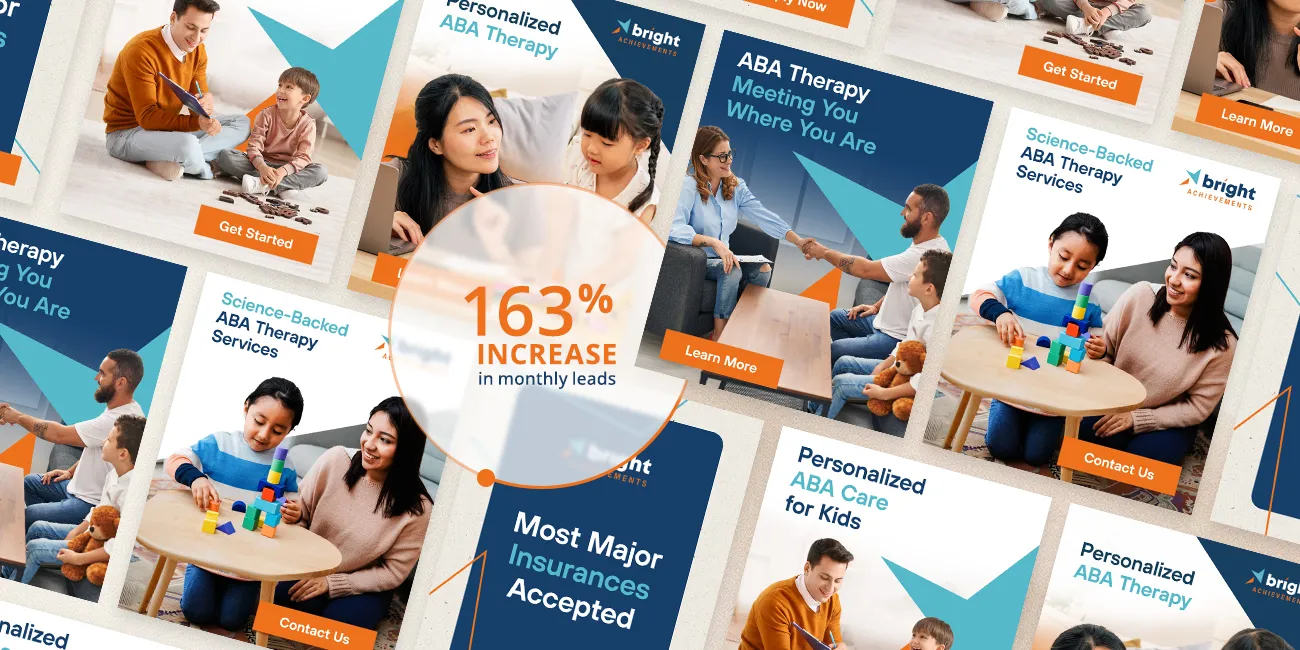
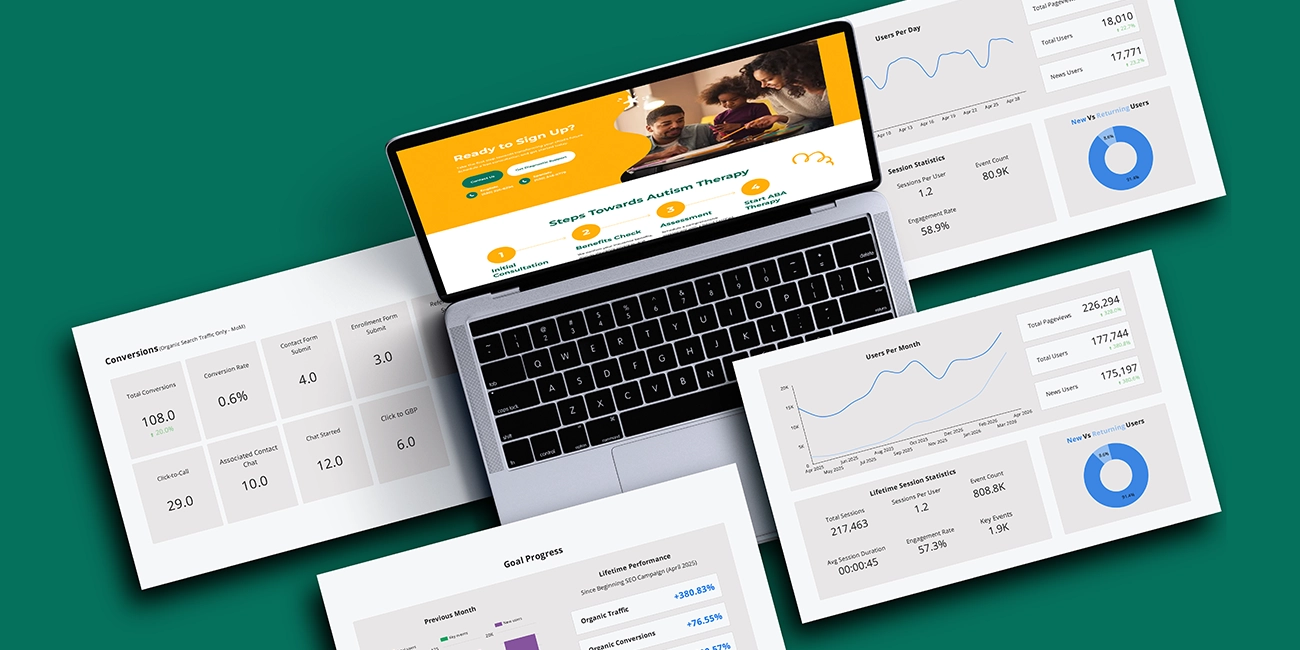
We do not publish New York results. For ABA and autism providers, Rise Up For Autism has grown organic traffic more than 380 percent over the life of the engagement, and for substance use treatment, our MedMark Treatment Centers SEO work grew organic conversions 92 percent.
Community behavioral health
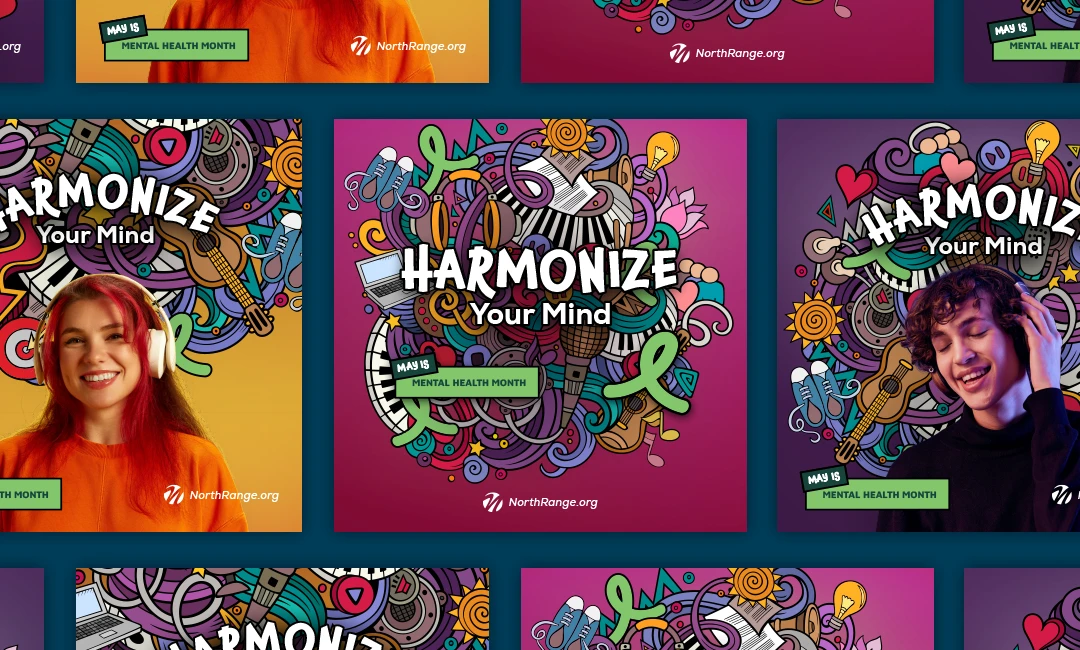
North Range Behavioral Health cut cost per conversion 63 percent with A-Train.
Timing and services
Our small ABA sample reached about 2.2 times baseline sessions by month three. Services matched to New York: SEO and AIO, family support marketing, and behavioral health marketing.
New York Behavioral Health Marketing, Answered
How do Health and Recovery Plans affect behavioral health marketing in New York?
HARPs are Medicaid managed care plans that integrate physical health, mental health, and addiction services for adults 21 and older who meet behavioral health eligibility criteria, with an enhanced benefit package and Health Home care management. For a provider serving that population, care managers and plan relationships shape referrals as much as consumer marketing does. Confirm current eligibility and plan rules directly.
What does New York law allow in substance use marketing?
Mental Hygiene Law 32.06 prohibits substance use providers and certified recovery residences from paying or accepting anything of value for patient referrals. It carves out marketing staff who identify whom they represent and limit their activity to educating potential patients. At the federal level, the Eliminating Kickbacks in Recovery Act (18 U.S.C. 220) applies to all payers and does not protect compensation that varies with referral volume or amounts billed, and Google, Meta, Microsoft, and Nextdoor require LegitScript certification for addiction treatment ads. This is a summary, not legal advice. Confirm current requirements with counsel.
What is a realistic marketing timeline in New York?
It depends on the service line. Our small ABA sample reached about 2.2 times baseline sessions by month three, and New York City's ABA term sits at difficulty 17. The substance use term, at difficulty 55, will follow the slower cohort curve: movement around month three, material results around month six, and conversions two to three months behind.
What should a New York organization expect to pay per lead?
We model New York in tier 1 of our report scale, which is an editorial adjustment rather than a measurement. That yields planning ranges of $78 to $105 for substance use disorder, $31 to $41 for mental health, and $41 to $55 for ABA and autism services. For organizations that rely on care manager referrals, cost per paid lead is only part of the acquisition picture.
Can A-Train support a New York organization?
Yes. We work with behavioral health organizations nationally from our Colorado offices. We do not publish New York results, so the numbers on this page are national observed results or modeled estimates, and we will say which is which in the first conversation.

Schedule a FREE 30-Min Discovery Meeting

Matt Harrington, BCBA, LBA
Growth Strategist