Watch This Episode
Listen
The Fight for Quality ABA Therapy: One Nonprofit’s 20-Year Perspective
What does it take to build ABA programs that create lasting independence for learners?
In this episode of Tim Talks: Behavioral Health, Tim Zercher sits down with Stacey Shook, PhD, Director of Northwest Behavioral Associates, to discuss what she’s learned from more than 25 years in the field of Applied Behavior Analysis.
“This is our worldview. Our worldview is behavior analysis. And that’s how we interact with each other, and that’s how we interact with the learners.”
How Insurance Companies Are Reshaping ABA Treatment Plans
Dr. Stacey Shook describes a shift away from what she calls “the glory days of behavior analysis,” when treatment teams could identify a learner’s most significant skill deficits and build a plan around them directly. Today, insurance companies — not behavior analysts — often dictate the shape of treatment plans, sometimes disputing whether deficits like executive functioning or adaptive skills even count as core features of autism. This second-guessing, she says, is a daily source of strain on clinicians and directly affects whether families can access authorized care at all. (Internal link opportunity: insurance/funding FAQ page, or a blog post on navigating ABA insurance authorization.)
Why Services Across Home, School, and Community Matter More Than Clinic Time Alone
Rather than treating the clinic as the primary setting, Shook’s organization builds services around home, school, and community environments — because that’s where learners actually spend their time and where skills need to generalize. She points out that lifespan services mean constantly looking ahead: is this learner headed toward a college classroom, a workplace, independent living? Programming has to account for that from the start, not retrofit it later. (Internal link opportunity: service pages for home-based, school-based, or community-based ABA.)
What Actually Predicts Long-Term Clinician Success
Shook argues that clinical skill alone doesn’t determine whether a behavior technician or BCBA will last — commitment to the organization’s values and to the science of behavior analysis does. Staff who see ABA as a genuine worldview, rather than a manual to follow, build the kind of relationships with learners that make services effective long-term. This is also framed as a nonprofit differentiator: newer clinicians without mentorship don’t yet know what they’re missing until they’re in an under-supervised, ethically uncomfortable situation.
About Our Guest: Insert Name
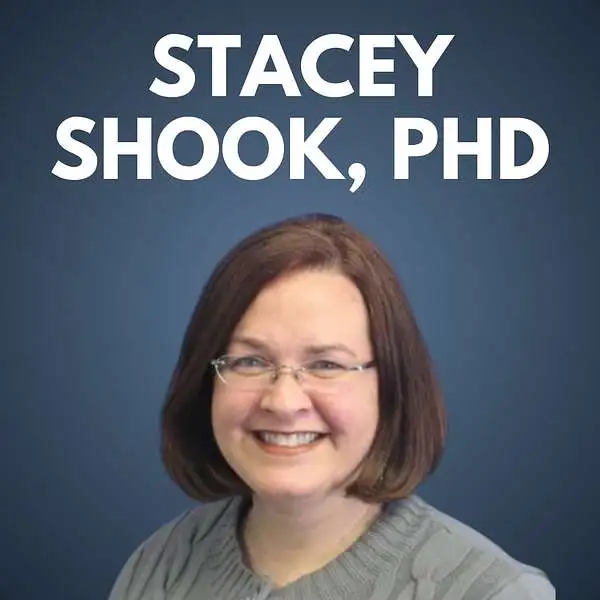
Stacey Shook, PhD is the Director of Northwest Behavioral Associates, where she has spent more than 25 years leading programs that support individuals with autism across the lifespan. She holds a Ph.D. in Special Education from the University of Washington and has extensive experience in Applied Behavior Analysis, clinician development, and nonprofit behavioral health leadership. Stacey is passionate about delivering comprehensive, community-based services while mentoring the next generation of behavior analysts.
Visit the Northwest Behavioral Associates Website
Episode FAQ
What does quality ABA therapy actually look like across different settings?
Quality ABA therapy isn’t confined to clinic sessions — it extends into the home, school, and community, since that’s where learners spend most of their time and where skills need to generalize. Effective programs address socially significant needs across every environment a learner lives in, not just the therapy room.
Why do insurance companies play such a large role in shaping ABA treatment plans?
Since most ABA services are insurance-authorized, treatment plans often have to be written and structured to meet each insurer’s specific requirements — sometimes including disputes over whether certain skill deficits even qualify as core features of autism. This can limit which services get authorized and, in turn, what families can access.
How do ABA organizations typically find new clients or staff?
Word of mouth remains central — from schools referring families based on past success, to alumni clinicians who’ve gone on to become professors or open their own practices. This kind of organic referral often reflects real-world outcomes more than paid marketing does.
Episode Transcript
View the full transcript
Timothy Zercher
Well, Stacy, thank you so much for taking time today. I really appreciate it.
Stacey Shook, PhD
Thank you. I’m happy to be here.
Timothy Zercher
Yeah, absolutely. See, you’ve been leading in ABA for over two decades now. What first brought you into the field and what has kept you committed to it over so many years?
Stacey Shook, PhD
I was an undergraduate psychology major, and we were told at the very beginning that you need to go to graduate school with this degree, or you’re gonna be very hard-pressed to find a job. And so as an undergrad, I was looking for internships. And near my hometown, my uncle happened to be the CFO. It was called Potomac Center. And this was right when deinstitutionalization had happened in the late 1980s. So it was a residential facility for children, youth, and also adults. And there were some folks there who had been basically institutionalized their whole lives who did not have a diagnosis of autism then, but would have a diagnosis now and since that time. And it was meeting them, interacting with them, being a part of their lives was different than anything I’d ever experienced before. And I became very interested in the diagnosis itself. I also happened to be at a university that was behavior analytic in nature, pure coincidence. And from the very beginning, the coursework just spoke to me, and it was a really good match. The language of what I was hearing about how the world works and the interest in a diagnosis that, while not new in the late 1980s, there wasn’t a lot, a whole heck of a lot known about it. Rain Man had just come out. So there was just beginning to be an interest in it. So that’s what got me in the field, and what’s kept me in the field is the same. The science of behavior analysis is, I like to say, very elegant. And it is a science as well as a little bit of an art. And the learners and the families that we meet and we work with are very special.
Timothy Zercher
That’s awesome. I’m sure that the connection to the real people that you’re working with every day is what keeps you so motivated, keeps you in the field. Yes. And so you’ve worked across clinic, community, and education settings. Where do you think programs are most effective when it comes to building real independence for coins?
Stacey Shook, PhD
Across those settings. So not just one setting. So at MBA, we deliver services. The core of the service is typically in the center, in the clinic, and that’s with the BCBAs and some of the behavior technicians, but many of our learners also receive services in their home. We have a pretty robust community-based program, which is very important because we do provide services across the lifespan. So we’re not just an early intervention, we’re not just in adult services. We also work in schools, both public and private, with our learners. And so it’s really that generalization, not just for the learners, but the visibility that we get to a learner’s world. I always say that we’re not here to provide services in parallel with everything else that’s going on with their lives. We’re here to provide comprehensive services and to address those socially significant needs that affect a learner and their families across all environments.
Timothy Zercher
I love that. I think it’s a slow movement, but I do think there is a movement across ABA and behavioral health to diversify your impact across environments, because I think that’s where the real impact is on individuals’ lives.
Stacey Shook, PhD
Yep. There are lots of things you can practice in a clinic that we know don’t generalize to the outside world. Same with school, the educational system in this country, period, not just for individuals with autism. It’s important to think about where is a learner currently spending the majority of their time? Probably not inside this office. Because we do provide lifespan services, we’re always looking to the future. And where are they going to be spending their time? Is it going to be in a college classroom? Totally could be. Is it going to be in a work environment? Is it going to be at home? And we need to be programming for them to be successful in those areas from the very beginning.
Timothy Zercher
Absolutely. So with your experience in training teams and supervising clinicians, what have you learned about developing staff who can consistently deliver high quality care over time?
Stacey Shook, PhD
It sounds very trite, but it starts with their attitude and it starts with their commitment to the values of your organization and then their commitment to the science of behavior analysis. You can be an extremely skilled clinician and be in it for the wrong reason. And at the end of the day, you’re not going to last for you’re not going to be successful very long. And your learners are not going to be successful because you’re not going to build meaningful relationships with them. And so, I mean, we’re a nonprofit. So the type of staff that we get, behavior technicians all the way up to supervisors, the most successful of those clinicians are those that buy into our core values and buy into the science of human behavior, that it’s not just, oh, here, we read this white book and this book tells us what to do with this very specific population. Nope. This is our worldview. Our worldview is behavior analysis. And that’s how we interact with each other, and that’s how we interact with the learners.
Timothy Zercher
Absolutely. And every individual is different. You can’t just have a single policy book. And what have you found is the hardest part of growing your organization or your team?
Stacey Shook, PhD
The medical model that we wanted to be a part of so badly. And in hindsight, maybe not the best idea. So I talk about the glory days of behavior analysis when a team could say, hey, here are the most significant skill deficits for this learner, and here’s how we’re going to approach them. And maybe all of the skill deficits are in one domain. Maybe they’re across five domains. We don’t have that luxury now. Our intervention packages are dictated to us for the most part by a third party. And those third parties are insurance companies and they are not behavior analysts. Sometimes I question if they’re even human beings. Aside from just the bureaucracy, we have to craft the wording in this treatment plan for this company has to read like this, as opposed to this other company where it can read like this. Unfortunately, I feel like there’s a lot of second guessing. Like, ooh, is this company gonna going to agree that is a core deficit of autism? That’s how that person got diagnosed. To hear that executive functioning is not a core deficit of autism, to hear that adaptive skill deficits are not a core deficit of autism, to hear that an individual doesn’t require intervention because they don’t have significant competing behaviors. That’s what wears on us every day. And that’s what impacts the ability to retain staff. That’s what impacts the ability to serve learners. Because if services aren’t authorized, families can’t afford to pay for it out of pocket. When you’re contracted with an insurance company, there’s all kinds of limitations that are imposed on you. While I appreciate that it has made on paper anyway, ABA more accessible to individuals for whom it would not have been accessible. I do not think it has made it more accessible off paper in practice.
Timothy Zercher
That makes complete sense. And I can totally see how that would drain team members and therefore impact burnout and dropout and deterrence and all of those pieces. Since we’re a marketing agency that specializes in behavioral health, we always ask some marketing type questions. First one is how does your organization go about gaining new clients? Yeah, the nonprofit groups operate as as referrals for kind of the stage internet, really. Like often the last option, and therefore you don’t necessarily have to go to the city.
Stacey Shook, PhD
We’ve been getting a lot of referrals recently. So schools with whom we’ve worked where that learner has been particularly successful. We had a we have a learner now whose family um said the school said we’re subcall you because it worked with uh you were when they graduated. They don’t know exactly what they want you to send a BT here and do the same thing for my client. And it’s like, oh, okay.
Timothy Zercher
That’s classic word of mouth. You’re having an impact, so people talk about you. Yeah. And what is one marketing tactic or strategy that your team is evaluating or if not evaluating for yourselves, just watching really closely in the marketplace right now?
Stacey Shook, PhD
We’re actually looking for staff recruitment. There’s a lot of companies now that don’t have the financial constraints that a nonprofit has for sure, but probably even a smaller for-profit organization that really needs where that margin of insurance reimbursement and what individuals need to be paid fairly and to afford to live in this economy. And we’ve been having a heck of a time finding BCBA. In the past, we’ve had more difficulty finding behavior. That is not the case now. We have behavior technician applicants coming out of the woodwork. We’re having a difficult time finding young behavior analysts. We’re hypothesizing that it is more financially palatable or lucrative to work for a larger organization. The marketing that we’re using is a bit word of mouth. So former staff, current staff, but really staff we have provided training, supervision, coaching to who’ve gone on to become much more influential in the field. They’re now professors or they have their own organization someplace else. We’re really looking to them to help us market. What is it about starting out at MBA that got me to where I am? Again, it’s that word of mouth because purely compensation and benefits, smaller agencies just right now can’t compete with the big boxes. A brand new anything. You don’t know what you don’t know. You don’t know the benefit of having constant supervision and mentorship. You don’t know how that’s going to impact your relationship with the science. It’s in your relationship with your own values and the values of the organization.
unknown
Yeah.
Timothy Zercher
And you don’t know the difference between a for-profit and a nonprofit and what that means for the work environment. And don’t talk about the fact that you also might be overworked and burned out.
Stacey Shook, PhD
And have no supervision and be put in situations that are unethical and very uncomfortable for you and make you question the efficacy and the elegance of the science and the commitment to people.
Timothy Zercher
But they’re new. Professionals always struggle to figure out what matters to them. Would you guys consider yours a large organization or a smaller We have a pretty supervision rich hierarchy.
Stacey Shook, PhD
We’re pretty top heavy. So there’s doctoral level and very senior level masters, behavior analysts who are intimately involved with all of the learner’s programs. So the longevity of the practice, the longevity of the learners, as I’m sure you can imagine, funders don’t like that. They want to authorize hours for somebody that they can pay $25 an hour for.
Timothy Zercher
Yep. Cheaper the better. And who cares about the quality?
Stacey Shook, PhD
We don’t care. Who delivers them, but this is what we’re paying you to do it.
Timothy Zercher
So good for you guys to stick to your guns and say, no, quality matters. We’re gonna make it matter. I think you guys are succeeding as well. Thank you so much for your time. We really appreciate it. We appreciate the work that you’re doing in your communities. So thank you, Stacey.