Watch This Episode
Listen
Beyond Client Acquisition: How Mike Fidgeon Is Solving Behavioral Health’s Workforce Crisis
What does it take to lead a behavioral health organization through growth, transformation, and constant change without losing sight of the people you serve?
In this episode of Tim Talks: Behavioral Health, Tim Zercher sits down with Mike Fidgeon, CEO of Hillcrest Family Services, to explore the leadership lessons Mike has gained from more than 30 years in behavioral healthcare.
Mike shares why mission and financial sustainability aren’t competing priorities, how better communication creates stronger organizational alignment, and why leaders need to stay flexible as their teams and organizations evolve.
They also discuss one of behavioral health’s biggest challenges: making help easier to reach. Mike explains why the industry needs to shorten the distance between someone realizing something isn’t right and connecting with a trusted person who can help them take the next step.
The conversation also explores workforce development, building stronger talent pipelines through universities and local partnerships, and how CCBHC marketing is shifting away from traditional client acquisition toward solving capacity and staffing challenges. Mike closes with what behavioral health leaders need to prepare for as the industry continues to change.
Workforce Development Is the New Client Acquisition
For safety-net providers like Hillcrest in Iowa, the marketing challenge isn’t filling the waiting list, it’s filling the workforce pipeline. Because CCBHCs and similar organizations legally can’t turn people away, demand already outpaces capacity. That shifts CCBHC marketing dollars and creative energy away from consumer-facing campaigns and toward building relationships with local colleges, universities, and even Bible colleges to recruit future clinicians, social workers, and nurses. For agencies working with safety-net or CCBHC clients, this reframes “marketing” to include employer branding and university partnership campaigns, not just patient-facing outreach.
Simplifying the Path to Help Is a Brand Opportunity
Mike’s comment that “help should be easier to reach” points to a real gap in how behavioral health organizations communicate access. He’s specifically interested in the moment before someone seeks treatment, the gap between a person privately sensing something is wrong and them finding a trusted person who can point them toward care. From a marketing standpoint, this suggests opportunity in top-of-funnel, low-barrier content and messaging (plain-language explainers, community touchpoints, trusted-messenger partnerships) that meets people earlier and reduces the friction and complexity of navigating the system.
Mission-Driven Messaging Still Needs a Margin Story
The “no margin, no mission” philosophy has marketing implications beyond finance. It suggests that messaging built purely around mission and impact should also reflect organizational sustainability and focus, being clear about what an organization does exceptionally well rather than trying to be everything to everyone. For CCBHC marketing and branding purposes, this supports narrowing service-line messaging to areas of real strength and impact, rather than diluting the brand across every possible offering.
About Our Guest: Mike Fidgeon
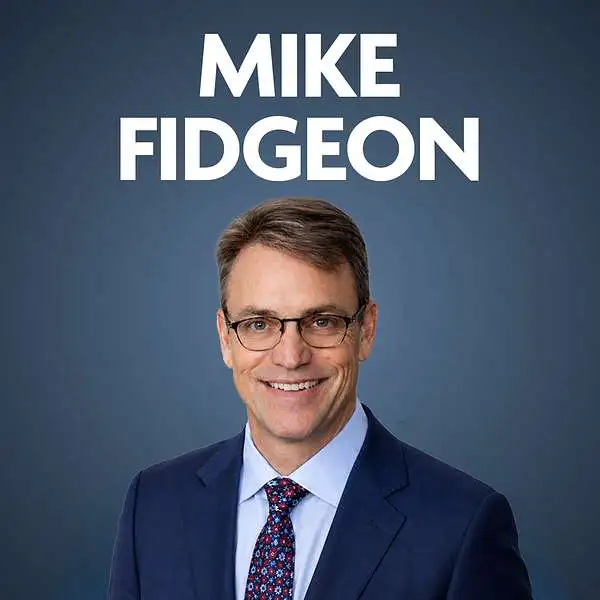
Mike Fidgeon is the CEO of Hillcrest Family Services and a behavioral health executive with more than 30 years of experience leading organizations through growth, transformation, acquisitions, integration, and organizational change. His leadership focuses on aligning mission, people, strategy, operations, and financial performance to create sustainable impact.
Visit the Hillcrest Family Services website to learn more about their mission.
Episode FAQ
What makes CCBHC marketing different from marketing at other behavioral health organizations?
Because CCBHCs are safety-net providers required to serve anyone regardless of ability to pay, CCBHC marketing often shifts away from traditional client acquisition. Instead, the focus moves toward workforce development, community education, and building the capacity needed to meet existing demand.
Why does Mike Fidgeon say client acquisition isn't a major challenge for his organization?
Mike explains that because CCBHCs can’t turn people away, most safety-net providers struggle with waiting lists rather than a lack of demand. As a result, marketing efforts are often better spent on staffing, workforce pipelines, and improving access to care rather than driving new client volume.
How does simplifying access to care factor into CCBHC marketing strategy?
Hillcrest partners with nearby colleges and universities to connect with students studying social work, nursing, and counseling early in their education. This marketing approach helps position the organization as a future employer and creates a pathway from internships to long-term careers in behavioral health.
Episode Transcript
View the full transcript
Timothy Zercher 0:00
Mike, thank you so much for joining. We really appreciate you taking time. Yeah, thank you for having me. Absolutely, absolutely. So you’ve led behavioral health organizations through acquisitions, turnarounds, growth initiatives, and organizational transformation. What leadership lessons have proven to be the most valuable across those very different challenges, different, almost different careers at each organization?
Mike Fidgeon 0:24
Yeah, I think it probably boils down to me for making people first. Everything else supports that. I’ve been in behavioral health care now for 30 years, and I think what’s kept me in it is pretty simple that this is really difficult work, but when you get right down to it, we can change the trajectory of somebody’s life. So people over profits was was a a tagline that somebody once brought to me. And I thought that’s pretty cool. You ought to make a t-shirt. And I think I’ve seen a couple of them out there.
Timothy Zercher 0:52
Yeah. Yeah. I love that. I love that. Well, and if you invest in the people right, you get profits eventually anyway, right? Like that that comes from doing good work.
Mike Fidgeon 1:00
Yeah. Yeah. No, I think the other adage that’s ingrained in my brain is no margin eventually means no mission, right? So one thing I’ve learned is that mission and margin aren’t competing ideas. If you’re going to serve vulnerable people for the long haul, you usually have to build an organization that’s financially durable, right? That it’s durable enough to still be there for them. And sometimes that means making the very difficult decision to stop doing good work so you can preserve and grow the work you’re uniquely positioned to do exceptionally well as an organization. And that may be different than what you’ve done in the past.
Timothy Zercher 1:36
Yeah. Well, and prioritization is hard as an organization, always. So you often speak about this idea of aligning mission with people, with strategy and operations and kind of getting all four moving in the same direction. When organizations struggle to execute on that, where do you typically find the disconnect is first?
Mike Fidgeon 1:56
Yeah, that’s a really good question. I think when it comes to communication, I think one of the things that I’ve learned is that because I’ve made a lot of mistakes over 30, 35 plus years now, one thing I’ve learned is that communication isn’t measured by what it is that I say to people. It’s measured by what the person on the other end understood and took away. So that sounds simple, but it took me a long time. So you can have great mission, vision, values, strategic alignment. But if the uptake and absorption of that isn’t the same as what it is that you’re putting out there, then it’s hard to get people rowing in the same direction. Absolutely. Absolutely.
Timothy Zercher 2:35
I often struggle with that in my organization. I have a coach that he really strongly believes in finishing whatever directive idea, whatever it is you’re communicating, and then stopping and saying, okay, now what did you hear me say? Now you tell me back what you’re understood out of that. Because I I think too fast, I’m eight steps ahead, and I haven’t told you the first five steps. And so often that making a miscommunication happens easily.
Mike Fidgeon 2:59
I think my reframe oftentimes is even simpler. Did that make sense? I’ll stop and pause and ask people if it made sense to them. And if I see a deer in the headlights, look back, then I’ll try to slow it down and say, repeat back to me what it is that you heard. And then just because you heard it, what does that mean to you? How does that impact you? How does that impact your people, etc.? Absolutely.
Timothy Zercher 3:24
My team actually has has uh has has made a t-shirt, which is just makes sense because I say that all the time to them. They probably get tired of it, actually. So then as behavioral health continues to evolve and change over these next, let’s say, five years, what do you believe leaders are either underestimating or misunderstanding today that they really need to be prepared for, especially as organizations, as the entire industry continues to change?
Mike Fidgeon 3:50
Yeah, for me, this has been something that has been a convergence of thoughts, things I’ve read, conversations that I’ve had really across the last year now. And our systems for getting services to people in behavioral health care are very complex. We ask people to navigate an incredibly complicated behavioral health system. And we’re asking them to do it exactly at the point in their lives when they may have the least capacity to navigate anything. So I think we need to make access a whole lot simpler and much more human. So the thought that continually goes through my head is that help should be easier to reach. And going upstream of that, I’m increasingly interested in what happens even before treatment. How do we shorten the distance between somebody privately thinking to themselves, something isn’t right for me? And then having a trusted human connection that can facilitate them getting the help they need.
Timothy Zercher 4:53
Yeah.
Mike Fidgeon 4:54
Yeah.
Timothy Zercher 4:54
And I think as time goes on, the the speed naturally decreases because people’s access to technology increases and that tends to speed things. But that makes a lot of sense because organizations tend to not necessarily move quickly like that. Yeah. What have you found is the hardest part of growing your team, your organization over these last several organizations and several teams?
Mike Fidgeon 5:13
I think it’s a tendency of leaders to become overly rigid on the way that they’ve done things instead of again going back to some things that we’ve already touched on that may sound redundant, not just communicating and helping people to understand you or to be understood, but trying to understand where your people are coming from. So I think it’s key for leaders not to fall in love with your programs, your word charts, or the way that you’ve always done things, right? Fall in love with the people you’re trying to serve and the outcomes you’re trying to create. Everything else should be allowed to change.
Timothy Zercher 5:48
Yeah, I love that. I love that. Be flexible, maintain flexibility and ability to change. So, last couple of quick questions. As a marketing agency and a branding agency, we always have to ask this for our behavioral health clients, which is all we focus on. What’s working best right now, especially outside of like word of mouth and kind of the standard local connections, when it comes to client acquisitions for you and your team?
Mike Fidgeon 6:11
Client acquisitions is not a problem for the Hillcrest business that I’m involved with now because we’re a safety net provider in Iowa, which means we can’t eject or reject somebody based on their ability or lack of ability to afford our services. And so we struggle as many safety net providers, especially certified mental health centers across Iowa with waiting lists. There’s more need than there is capacity to serve. So client acquisition is not something I’ve dealt with in my six years out here.
Timothy Zercher 6:43
Wow. That is good. That is good. I think most of our of our safety net providers, if you will, are our CCBHC clients, they don’t struggle with it in like four out of five of their service lines. And then one or two of them really struggle to engage well with the community, engage the services. So that’s a good, that’s a good sign. So then last question, what is one marketing tactic that you’re either like watching really carefully in the market or or just even considering for yourself?
Mike Fidgeon 7:11
You know, again, I guess coming back to uh to go back to your last question. While I don’t know that we really need to aggressively market for client acquisition, we do have an issue of serving that capacity, and that has to do with workforce development. So our marketing really the focus has shifted toward universities, the pipeline for future care service providers, social workers, licensed clinicians, nurses, et cetera. That’s where we really have put energy into making sure that one, the general community is aware. Where we’re at in Iowa, we have have the luxury of having three colleges: a community college, a Bible college, a lot of higher learning institutions to draw on. And so we’re trying to connect with students earlier with their counselors and the departments that that serve serve the students’ interest in order to let them know that we’re a future place of employment, certainly a step in that direction toward internships.
Timothy Zercher 8:20
Yeah, that makes sense. That makes sense. Those good local partnerships with that talent pipeline. I think that is a really good strategy. And I think that’s one that several of our clients are looking at as well. I don’t think most smaller communities have the advantage of having three different colleges, universities, though. It’s definitely a nice advantage for you all. Yeah. Perfect. Well, thank you, Mike. I really appreciate you taking time and sharing some of your insights. I know you’re doing uh you’re doing good work for your team and for your community too. So we thank you for that as well.
Mike Fidgeon 8:46
Yeah, thank you. I appreciate again being on your show.
Timothy Zercher 8:49
Absolutely.