
Watch This Episode
Listen
Insight Custom Headline Pulled Derived From the Show Notes
In this episode of Tim Talks: Behavioral Health, host Timothy A. Zercher sits down with co-founders Naveen Chugh and Deepak Kumar, a tech duo who’ve spent 13+ years solving operational challenges in the behavioral health space – from compliance to automation to client engagement.
They dive into what it really takes to get clinicians to embrace new systems, why change is so hard in this industry, and how to decide which problems are worth solving with tech.
This is a candid conversation about smart customization, user-first design, and how to move fast in a space that resists change.
How Referrals and Retention Drive Growth in a Competitive Industry
Every industry is competitive, and healthcare technology is no exception. Deepak Kumar explained that the company began more than a decade ago when Naveen Chugh reached out with a problem that needed solving, and that problem-first mindset still shapes how they grow today.
Rather than relying on aggressive sales tactics, Naveen shared that the team focuses on helping people who genuinely need support and letting the quality of their work speak for itself. As a result, referrals and long-term client retention account for most of their growth. For behavioral health organizations, this is a useful reminder that trust and reputation often outperform short-term promotion.
Why Change Management Is the Hardest Part of Scaling
When asked about the biggest obstacle to growth, Deepak answered in one word: change. Even an excellent product can meet resistance when it disrupts workflows people have relied on for years.
Naveen noted this is especially true in behavioral health, where many clinicians have followed the same processes for decades. Introducing new technology in these settings is less about selling and more about educating.
The team invests time in hands-on training and ongoing support, because adoption is earned rather than automatic. Organizations planning a new EHR, CRM, or patient intake system can benefit from building training and staff buy-in into the rollout from day one.
Balancing HIPAA Compliance With Automation and AI
For healthcare organizations exploring AI and automation, compliance cannot be an afterthought. Naveen was clear that HIPAA compliance is non-negotiable, which is why the team builds on established HIPAA-eligible platforms like AWS and Salesforce rather than creating infrastructure from scratch.
Deepak described the operational safeguards behind that commitment, including rigorous staff training, strict access controls, monitoring of every access point, regular risk audits, and daily batch processes that wipe machines clean.
Timothy pointed out that many providers assume their technology vendors are compliant without verifying it. The takeaway for behavioral health leaders is to ask vendors direct questions about their safeguards, review Business Associate Agreements, and treat security as a core requirement rather than a checkbox.
About Our Guest: Deepak Kumar & Naveen Chugh
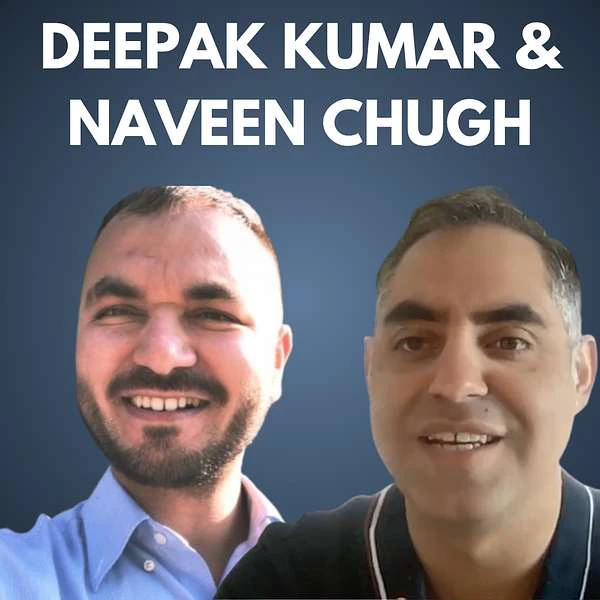
Collectively Naveen and Deepak have over two decades of combined experience in the Behavioral Health space and are experts in industry dynamics, facility operations and process improvement through automation.
Visit the Binario Research website to learn more about Deepak and Naveen’s behavioral health technology expertise.
Episode FAQ
How can a healthcare technology company grow in a competitive market?
According to Naveen Chugh, growth comes from focusing on people who genuinely need help and letting the quality of the work speak for itself. For their team, referrals and long-term client retention drive most new partnerships, rather than aggressive sales tactics.
Why do behavioral health organizations resist new technology?
Change is difficult, even when a new tool is better. Many clinicians in behavioral health have followed the same workflows for decades, so new systems can feel disruptive. Deepak Kumar and Naveen Chugh explained that successful adoption depends on education, hands-on training, and ongoing support rather than simply selling a product.
How should an organization decide which processes to automate first?
Start by identifying the biggest financial or operational pain points, then map each problem by effort and impact. The guests recommend prioritizing low-effort, high-impact solutions first. Host Timothy A. Zercher compared this to A-Train Marketing’s approach of finding the highest and best use of every investment.
Can AI and automation be used while staying HIPAA compliant?
Yes, when compliance is treated as a core requirement. Naveen Chugh shared that their team builds on established HIPAA-eligible platforms such as AWS and Salesforce instead of creating infrastructure from scratch. Deepak Kumar added that staff training, strict access controls, access monitoring, risk audits, and daily machine wipes are all part of their safeguards.
Episode Transcript
View the full transcript
Timothy A. Zercher (00:00)
Welcome, Naveen and Deepak. We’re excited to have you here.
How does your team go about gaining new partners in such a competitive industry?
Deepak Kumar (00:29)
No matter the industry, it’s always competitive. We started over a decade ago when Naveen called me with a problem to solve…
Naveen Chugh (01:05)
We focus on helping people who need help and let our work speak for itself—referrals and retention drive most of our growth.
Timothy A. Zercher (02:21)
What have you found to be the hardest part about growing and scaling your business?
Deepak Kumar (02:32)
Change. Even great products are resisted if they disrupt familiar workflows…
Naveen Chugh (04:17)
Especially in behavioral health, where many clinicians have done things the same way for decades—it’s about educating, not just selling.
Deepak Kumar (05:48)
We take time to train and support users. Adoption isn’t automatic—it’s earned through hands-on help.
Timothy A. Zercher (07:14)
How do you determine what problems are worth automating or solving first?
Deepak Kumar (07:52)
We ask our clients: what’s the biggest pain point financially or operationally? Start with the low-hanging fruit that moves the needle.
Naveen Chugh (08:31)
And we bring cross-industry perspective—clients often don’t realize what’s possible until we show them how others are solving it.
Timothy A. Zercher (10:42)
It’s like A-Train’s approach: what’s the highest and best use of your investment?
Naveen Chugh (10:55)
Exactly. We map problems by effort and impact—then focus on low-effort, high-impact solutions first.
Timothy A. Zercher (11:38)
How do you balance HIPAA compliance with automation and AI?
Naveen Chugh (11:58)
Compliance is non-negotiable. We leverage HIPAA-compliant platforms like AWS and Salesforce instead of reinventing the wheel.
Deepak Kumar (13:42)
And we train our staff rigorously, enforce access controls, and even run batch processes to wipe machines daily.
Timothy A. Zercher (14:39)
A lot of providers assume their tech vendors are HIPAA-compliant—until they’re not.
Deepak Kumar (15:05)
We go beyond assumptions. Every access point is monitored. Every risk is audited. Security is core to what we do.
Timothy A. Zercher (15:46)
That’s powerful. Thanks again for joining me. I know this will be valuable for organizations navigating change.
Naveen Chugh (16:14)
Thanks, Timothy. We’re here to help people move forward.