The Marketing Priorities Behavioral Health Leaders Can’t Ignore
If you look back at the industry conversations we were having just 12 months ago, the terms organizations were leaning into were clear: empathy, inclusivity, and personalization. They were the right focus for the time. However, as we move deeper into 2026, those concepts have shifted from being “nice-to-have” philosophical goals to being the baseline for survival.
In our daily work with behavioral health clients across 23 states, we’re seeing a new reality emerge. It’s a landscape defined by tighter budgets, a workforce still incredibly difficult to attract and retain, and a digital search environment upended by artificial intelligence (AI).
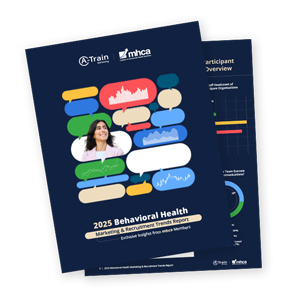
This year, we aren’t just looking at what’s “new.” We’re looking at what has passed the pressure test of the last year. Grounded in first-party data from the mhca 2025 Industry Trends Report and global consumer insights from global research firm Mintel, this outlook is designed to help your organization cut through the noise and focus on what actually drives results in 2026.
The recurring theme?
It’s time to move from curiosity to high-level execution.
The Maturation of Safety Net Messaging
One of the biggest shifts we’ve seen is how organizations talk to people in crisis. In 2025, they focused on general empathy. In 2026, that has matured into what we call “safety net” messaging. When we talk about safety net practices, we are referring to the providers defined by the Institute of Medicine as the organizations that deliver critical care to Medicaid, uninsured, and vulnerable populations.
Why does this matter for your marketing? Because when someone is in a mental health or substance use crisis, their “cognitive load” can reach the point of overload. They struggle to process mental health jargon, acronyms, or lengthy instructions. Your marketing in 2026 needs to be a calm “port in the storm.”
❌ Too Much, Too Fast
We are advising clients to strip their messaging down to the absolute essentials. Use plain-language and simple headlines like “You’re not alone” and “We’re here to help.” The goal is to promote immediate stability. This means your tone should be kind and reassuring—think softer phrasing and slower pacing in your videos.
✅ Simple, Steady Reassurance
Visually, it is best to move away from the high-energy, high-contrast imagery that can feel triggering. Instead, embrace muted, trust-inspiring colors. Using trauma-informed design principles—like making “next steps” predictable and easy for clients to understand—creates a digital experience that mimics the safety you surely prioritize in your clinical setting.
Outcomes as the New Social Proof
For years, the gold standard of behavioral health marketing was the personal testimonial. While patients’ experiences still have a place, the market in 2026 is demanding more. We’ve moved into an era of “proof with protection.” Potential clients are looking for outcomes-driven storytelling showing that your care actually works. Importantly, so are the clinicians who refer clients to you.
This is a crucial tactical advance. Rather than just sharing success stories, organizations are now leading with anonymized, evidence-based, easy-to-digest data. For example, telling a potential donor or partner that “78% of our clients report improved daily functioning within 12 weeks of starting treatment” carries more weight than a generic quote or testimonial.
This approach enhances your credibility by proving that your care is both compassionate and clinically effective. You highlight the human element of your services through the lens of measurable impact.
Experience Design: The Hidden Revenue Stabilizer
We all know the workforce shortage is a persistent thorn in the industry’s side. But in 2026, we’ve realized that staffing shortages are also a marketing problem. If your intake process is clunky because you’re understaffed, you are losing valuable leads that you paid to acquire.
We need to learn how to better connect with our audience in a meaningful manner.
One element of the solution is predictive experience management. This year, CX (client experience) is no longer a differentiator. It has become a revenue stabilizer.
Organizations are increasingly using CRM data and basic automations to anticipate clients’ needs before they ask for help with them. Real-time feedback loops and tools like automated SMS check-ins and simple surveys can help move prospects through the process, keep existing clients engaged, and give organizations several touchpoints to deliver the brand message along with great service.
Why does this matter? Because in a competitive market, it is far more expensive to find a new client than to keep an existing one engaged. When your marketing promise of “unwavering support” is actually felt during the intake and treatment journey, you build the kind of loyalty that transcends a simple transaction and increases engagement.
An excellent example is our work with North Range Behavioral Health. This website transformation led to a remarkable increase in conversions of over 1,300%.
The Non-Negotiable Need for Data Discipline
If there is one “red flag” in the recent mhca Industry Report, it is this: 25% of organizations have no idea which of their marketing channels are actually driving results. Even more concerning, 22% of leaders say measuring ROI—a practice that is essential to success in any industry—is their top marketing challenge. In 2026, this is simply a barrier to growth you cannot afford.
It has been correctly stated that you can’t manage what you don’t measure. We are recommending that every organization prioritize a “data hygiene roadmap” in the first 90 days of this year (or as soon as possible given other initiatives). This means refining your Google Analytics 4 (GA4) setup, enhancing conversion tracking, and getting granular about the paths people take to find you.
Without clean data, your marketing budget is essentially a series of expensive guesses. We encourage organizations to integrate compliant tools like Freshpaint that unify tracking pixels and conversion events, while keeping HIPAA at the forefront, to ensure that every dollar you spend is working toward a measurable goal.
Search is Now a Dialogue: Understanding and Leveraging AI Overviews

The way people search for help is changing faster than most organizations are adapting. Google’s AI Overviews and other generative engines are now answering behavioral health questions directly on the results page. Some studies show that sites that used to rank #1 can lose up to 79% of their traffic if they fall below these AI summaries. This is making it harder to maintain a desired click-through rate across organic search and ads.
The answer for 2026 is natural language SEO. The old days of stuffing keywords (even carefully researched ones) into website content are behind us. AI models now boost content that sounds like a clear, compassionate human response to a real question. If your website content is built around conversational inquiries—”How do I find a therapist near me that takes Medicaid?”—it is much more likely to be featured in the AI summaries that a rapidly growing percentage of people say they have seen and read.
Tips for thriving in this new search environment include that you should:
- Use plain, relatable language and logical structure in your content.
- Reinforce credibility with clinician names, citations, and outcomes data.
- Build topic depth with interlinked pages that fully answer related queries.
- Hire an SEO team experienced in producing behavioral health content and natural language SEO expertise.
You should also broaden your media mix to ensure visibility across platforms. This may include reallocating budget toward short-form video, creator and partner content, PR and earned media, programmatic campaigns, and direct channels like email and SMS.
We’ve seen clients who switched to this “speak human” approach not only maintain their visibility but gain ground while their competitors lost 30–60% of their traffic.
Connection Over Convenience: A “Boots-on-the-Ground” Revival
There is a growing trend that Mintel calls the “affection deficit.” As the world becomes more automated, people are actually retreating from digital-only interactions. Unsurprisingly, they are craving something real. For behavioral health providers, this is a massive opportunity to return to “boots-on-the-ground” engagement.
The mhca report highlighted that health fairs, community tabling, and local partnerships are becoming top priorities. But the 2026 twist is that these in-person moments must be “digitally amplified.”
When you meet someone at a community event, you follow up with remarketing that feels human—not like a bot. Use storytelling and real photos of your team and your facilities, strictly avoiding stock imagery. By showing actual people in your local community, you increase the likelihood of potential clients reaching out to you.
Practical AI: The Transparency Requirement
Needless to say, AI is no longer a futuristic concept. It is having profound effects in the real world, including its use as a tool relied on for audience segmentation and content optimization. However, it is critical to remember that in the mental health space, trust is your most valuable currency.
Interestingly, while 66% of people think they can spot an AI-generated photo, nearly 60% are wrong when tested. This is why transparency is non-negotiable in 2026.
An overwhelming majority of consumers (84% in one study) say they want brands to be honest about when and how they leverage AI. If you use it to help draft a blog post or segment an email list, that’s fine—but content must always be clinician-validated and human-led. Clearly stating that you use a “human-in-the-loop” process is more than a smart legal precaution. That declaration helps your organization preserve the authenticity that clients are desperate for.
In a world of algorithms and AI, the most powerful strategy is still being fully human.
Your Website as a Living Sales Tool

Organizations historically developed websites as static brochures. However, it is crucial to get past that approach and leverage them more effectively. Nearly 60% of U.S. adults used the internet last year specifically to research health services. Your website is the first impression you make on potential clients, and their engage-or-ignore assessment of your organization happens in under 10 seconds.
If your website is cluttered, slow, or hard to navigate on a phone, potential clients subconsciously assume your care is just as disorganized. We’ve seen organizations triple their conversion rates simply by enhancing their UX—without spending a single extra dollar on ads.
They make those gains with steps like:
- Prioritizing a mobile-first, conversion-driven redesign focused on simplicity and speed
- Leading with clear value statements and engagement assistance: what they do, who they help, and how to start
- Using task-based design: anticipating visitor intent (book an appointment, verify insurance, find a location) and making those actions frictionless
- Building immediate trust through clinician credentials, outcome data, and accessible contact info
- Applying trauma-informed design, including predictable layouts, calming colors, and transparent next steps that reduce anxiety and drop-offs
- Tracking UX health metrics (time on page, bounce rate, mobile form completions) as part of their marketing KPIs
Recruitment: The New Brand Frontier
Finally, we have to address the elephant in the room: the behavioral health workforce shortage. The mhca report found that 56% of organizations see recruitment as their biggest operational headache. In 2026, your recruitment marketing is your brand marketing. You aren’t just trying to attract clients. You must also attract and retain an exceptional workforce.
%
56% of organization cite "Recruitment/staffing shortages" and "employee retention" as top challenges.
%
48% of organization say their current recruitment environment is competitive, and it's hard to fill roles.
Today’s behavioral health team members want more than a paycheck. Gen Z and Millennials in particular, are looking for a career with a purpose. Nearly 90% of them say a sense of meaning is vital to their job satisfaction. Your marketing should be showcasing your culture, your flexibility, and your commitment to clinician well-being. When you merge your recruitment efforts with your mission, you don’t just fill seats—you find the mission-driven people who will stay for the long haul.
Conclusion: Agility in an Era of Uncertainty
As we move into 2026 and extrapolate from the first-person data in the mhca report, the outlook is one of cautious optimism. Yes, the landscape is shifting, but movement creates opportunity. The organizations that will thrive are those that stay grounded in their clinical mission while remaining incredibly agile in how they execute their marketing.
Success this year comes down to three things: simplifying your message, grounding it in outcomes, and building genuine human connections. Whether you’re adopting new online search best practices to maintain visibility or designing and implementing campaigns that foster productive real-world interactions, keeping people at the center of everything you do is essential.
At A-Train Marketing, we’re proud to help behavioral health leaders turn these trends into measurable impact, providing guidance on how to stay grounded in their mission while remaining agile in their execution. Contact us to talk about your challenges and goals.