Listen
Show Notes
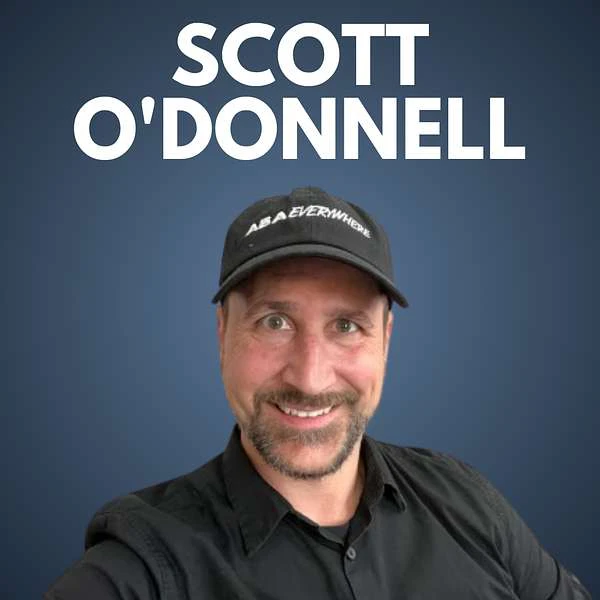
Applied Behavior Analysis (ABA) is more than just a therapy for autism—it’s a science that can transform lives across all populations. In this episode, Dr. Scott O’Donnell, PhD, joins Tim Zercher to share his journey into ABA, tackle common misconceptions about the field, and offer insights on preventing burnout for ABA staff. Plus, he dives into how behavioral science can inform marketing strategies and client growth.
If you’re in behavioral health, leadership, or marketing for ABA, this episode is packed with practical takeaways and a fresh perspective on the power of ABA.
Episode Overview
Timothy A. Zercher (00:00):
Well, Dr. Scott, thank you so much for joining us. Thank you for taking time out. I’m excited to talk with you today.
Dr. Scott O’Donnell, PhD (00:06):
Oh, great to be here. Thanks for having me on. I really appreciate it. I’m excited to talk about applied behavior analysis.
Timothy A. Zercher (00:11):
Awesome, awesome, awesome. Well, I like to start out with all of our guests. If you wouldn’t mind telling us kind of how you got into ABA, into the space, I find it’s not an industry you end up in on accident, generally.
Dr. Scott O’Donnell, PhD (00:22):
Yeah, so I was an undergrad. I found myself attending a lot of psychology classes and I was exposed to a lot of models and theories and I just felt like there wasn’t the scientific evidence backing it that I really desired. I was looking for a harder science. I mean, don’t get me wrong, Freud and Maslow tell good stories, but you know, they’re good examples of like where is the scientific evidence that is backing these theories. I was longing for something more, something to quell the skeptic in me. So I took a class taught by Dr. Philip Hine. It was an intro to behaviorism class and I found behavior analysis to be very agreeable and objective science—more of a hard science of psychology—and I found the vocabulary hard to argue with so I fell in love with it.
Timothy A. Zercher (01:05):
That’s awesome. That’s awesome. And have stuck with it ever since.
Dr. Scott O’Donnell, PhD (01:08):
Yep, ever since. Well, I was out of the field for a while. I was using it in a lot of different areas after my bachelor’s degree. There wasn’t a lot of work in applied behavior analysis at the time, but I was just wearing different hats and using it there. And I found it to be really helpful. Some examples are like I used to work at UPS as a supervisor and I used it in my department to help make that department the number one in the building.
Timothy A. Zercher (01:31):
Yeah, well I mean people are people right, whether they’re in a therapy seat or they’re driving a car for you. So what are some common misconceptions about ABA that you think are kind of holding the field back right now?
Dr. Scott O’Donnell, PhD (01:48):
Well, I’ll give you three. Misconception number one is that ABA is for autism—and this is false. ABA is applicable to everyone, young and old, rich or poor, no matter where you’re from or what you look like. Another misconception is that ABA is cold and unfeeling. It’s not compassionate, which I really feel like is untrue. Sometimes clinicians might behave in a way that’s not the most compassionate, but this isn’t ABA itself. ABA is practical science and compassionate. There’s nothing more compassionate than saying it’s not your fault. The environment determines behavior, and we can help.
And the third misconception is that ABA is about control. Yes, the goal of ABA is prediction and control of human behavior, but controlling people through aversives isn’t sustainable. Emotional reactions, avoidance, and counter-control happen. The way to motivate people is to reward them the way they want to be rewarded. A politician once told me, “You can’t lead a horse to water, but you can leave a trail of carrots.” It’s about being personal and learning how people want to be motivated.
Timothy A. Zercher (03:20):
That makes complete sense. You touched on this a little bit about controlling the environment. What strategies do you use to prevent burnout among ABA staff, especially in emotionally intense environments?
Dr. Scott O’Donnell, PhD (03:40):
Burnout isn’t just a problem in ABA; many Americans face it. It happens when work isn’t sufficiently reinforcing—financially or psychologically. Personally, I rely on Acceptance and Commitment Therapy techniques for myself. I model the behaviors I teach my clients, provide specific praise to others, and make sure reinforcement is consistent. Praise doesn’t cost anything and can go a long way toward preventing burnout.
Timothy A. Zercher (05:49):
Absolutely. I have a leader I respect who said, praise doesn’t cost you anything. It might feel like it does, but it doesn’t.
Timothy A. Zercher (05:55):
How does your team go about gaining new clients right now? What works well?
Dr. Scott O’Donnell, PhD (05:55):
Our field is competitive, but our skill sets are unique. Expanding ABA into other areas—beyond autism—is key. This means helping the remaining 98% of the general population with behavior science. Even competing with other disciplines can be an opportunity to show the effectiveness of ABA. The science of behavior can save the world; people just don’t know it yet.
Timothy A. Zercher (07:17):
Absolutely. What is one marketing tactic or strategy that your team is considering or watching in the marketplace right now?
Dr. Scott O’Donnell, PhD (07:29):
One tactic is stimulus-stimulus pairing—associating positive stimuli with a brand and negative stimuli with competitors, similar to political ads. Another is behavioral economics—using economic concepts to predict consumer behavior, like the maximum price someone will pay before switching products. Both leverage behavioral science in marketing effectively.
Timothy A. Zercher (09:16):
Absolutely. Perfect. Well, thank you so much for joining us, Dr. Scott.
Dr. Scott O’Donnell, PhD (09:24):
Oh, was great. Thanks for having me. It was great to be on.